18/0, 18/8, or 18/10? How to Choose the Right Stainless Steel for Your Kitchen
Why Stainless Steel Choice Matters
Ever struggled with sticky pans, unevenly cooked meals, or cookware that loses its shine? Picking the right stainless steel can save you time, make cooking easier, and improve the quality of your meals. This guide helps you understand which stainless steel grade—18/0, 18/8, or 18/10—is right for your kitchen.
Stainless Steel
Stainless steel is an iron alloy enhanced with chromium, nickel, and other elements to resist rust, stay strong, and keep its shine.
-
Chromium: Prevents rust and corrosion.
-
Nickel: Adds durability and smooth, shiny surfaces for easier cleaning.
18/10 stainless steel (18% chromium, 10% nickel) is the premium choice, combining maximum corrosion resistance, long-lasting shine, and durability.
Reference: Wikipedia: Stainless Steel
How It Fits Into Your Kitchen
-
Even Cooking: No hot spots when searing, stir-frying, or simmering.
-
Resists Stains & Rust: Perfect for tomato sauces, wine reductions, or acidic dishes.
-
Easy to Clean: Smooth surfaces wipe clean effortlessly.
-
Professional Look: High-gloss finish keeps your kitchen looking elegant.
Reference: Consumer Reports: Best Cookware Sets
Comparing Stainless Steel Grades
| Grade | Chromium | Nickel | Key Features | Best For |
|---|---|---|---|---|
| 18/0 | 18% | 0% | Basic rust resistance, magnetic | Budget flatware, entry-level cookware |
| 18/8 | 18% | 8% | Durable, moderate corrosion resistance | Everyday cookware |
| 18/10 | 18% | 10% | High corrosion resistance, lasting shine | High-use cookware, professional-grade cooking |
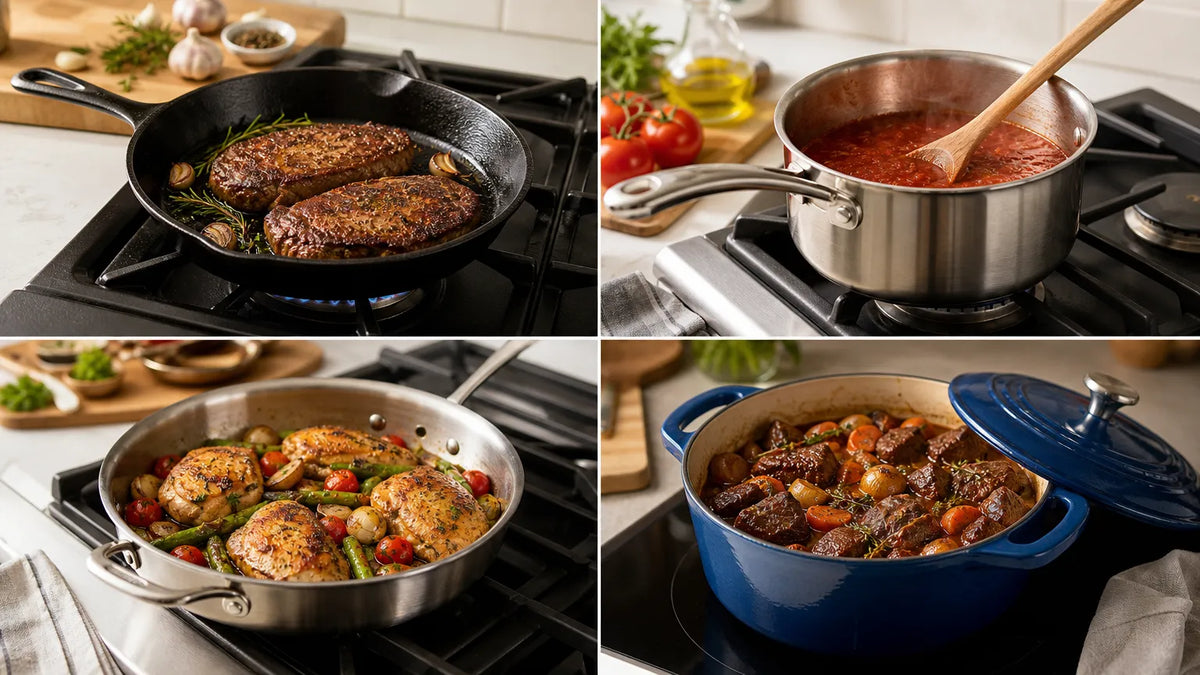
Example: Sear a steak or cook tomato sauce with 18/10 cookware—it heats evenly, resists discoloration, and stays looking new for years.
Simple Care Tips
-
Dry immediately after washing.
-
Avoid long soaks in acidic or salty water.
-
Use soft sponges and gentle dish soap; skip steel wool.
-
Hand washing preserves shine even if dishwasher-safe.
Reference: LeafScore: Pros & Cons of Stainless Steel Cookware
Why Deluxe Cookware Stands Out
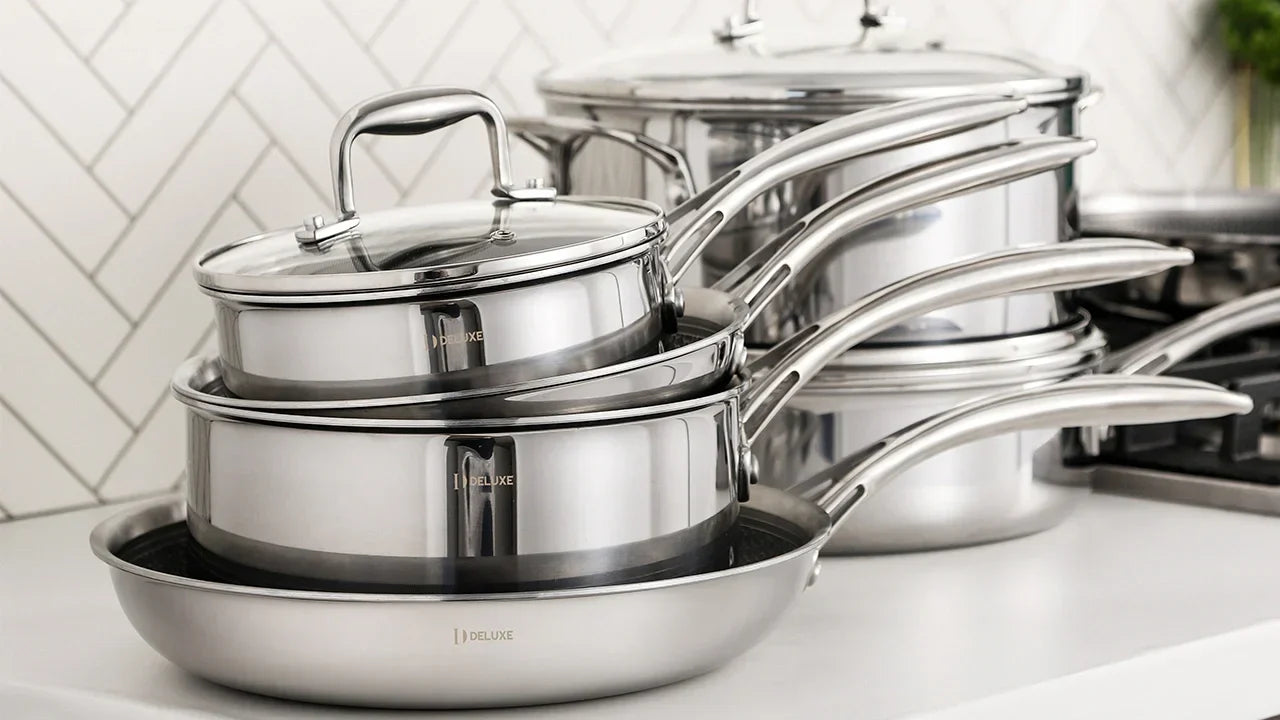
All Deluxe Cookware products use 18/10 stainless steel with three-layer steel-aluminum-steel fully encapsulated bases, providing:
-
Even Heat Distribution → perfectly cooked meals, no hotspots.
-
Warp Resistance → maintains shape under high heat.
-
Safe & Non-Toxic → free from PFAS, PFOS, lead, and cadmium.
-
Easy Cleaning & Long-Lasting Shine → stays like new for years.
Choosing the right stainless steel grade impacts your cooking, cleaning, and kitchen enjoyment.
-
18/0: Budget-friendly, entry-level use.
-
18/8: Reliable for everyday cooking.
-
18/10: Premium durability, corrosion resistance, and shine—ideal for high-use and professional-style kitchens.
Deluxe Cookware combines premium 18/10 stainless steel with expert design, giving you performance, safety, and elegance in every meal.