Ceramic vs. Stainless Steel Cookware: Which Fits Your Cooking Style?
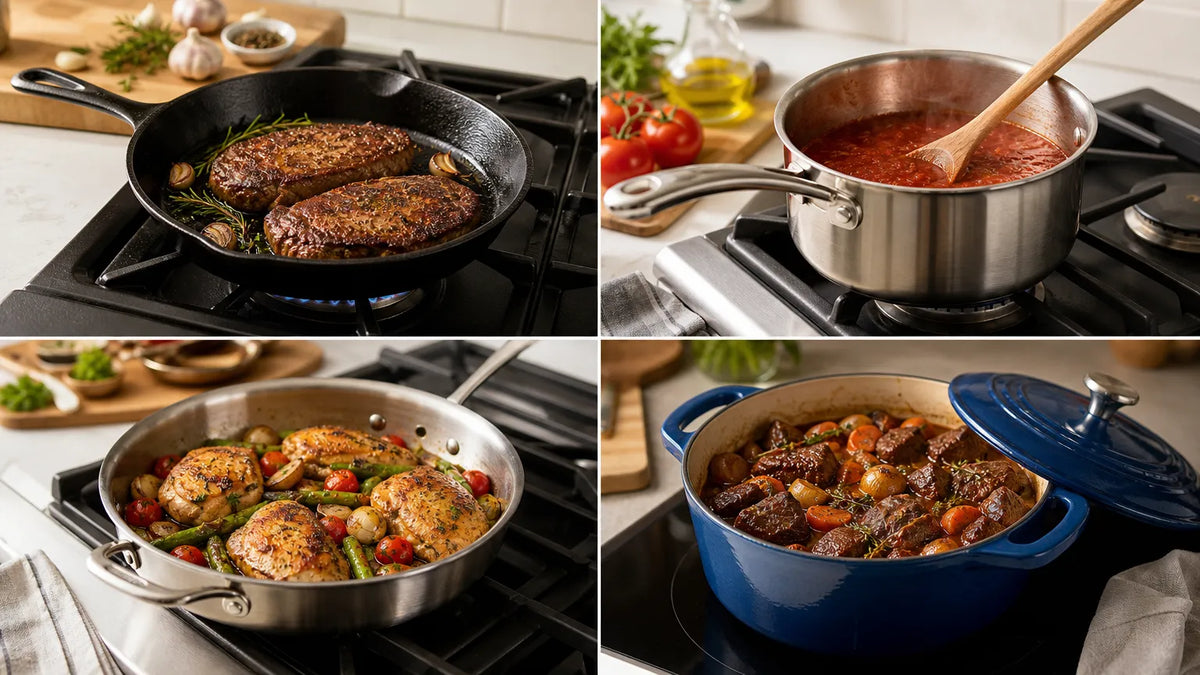
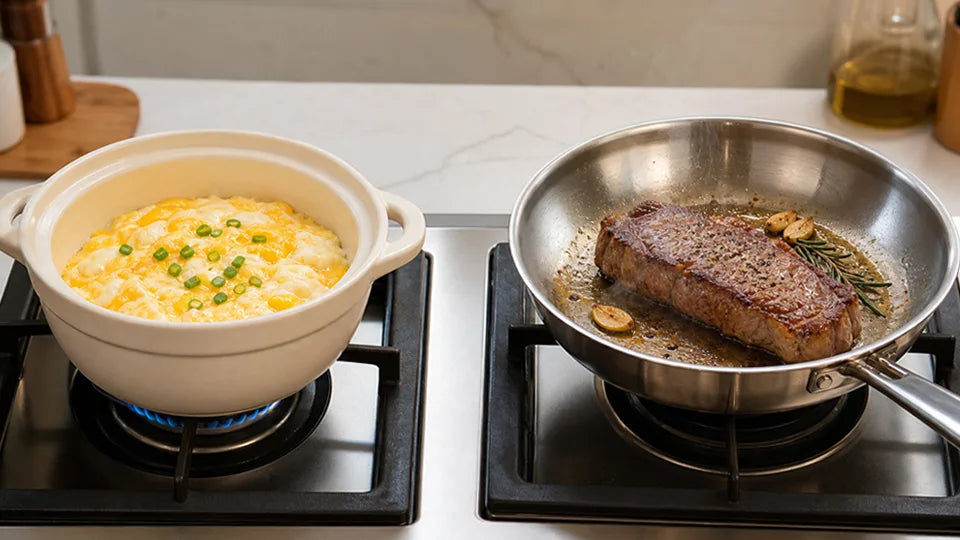
The choice between ceramic vs. stainless steel cookware depends less on a universal winner and more on the food, heat level, and maintenance you prefer. Ceramic-coated cookware generally offers easier release for delicate foods at low to medium heat, while bare stainless steel supports deliberate browning, fond, and deglazing with more technique. Many American kitchens benefit from using both. Before comparing products, distinguish ceramic-coated metal from solid ceramic and separate bare stainless steel from clad or hybrid construction.
What Do Ceramic and Stainless Steel Mean?
These labels describe broad categories, not identical products. “Ceramic cookware” often refers to metal cookware with a ceramic nonstick coating, while stainless steel cookware may contain a conductive aluminum or copper layer. Product construction determines weight, heat response, induction compatibility, care, and surface behavior.

Ceramic Usually Describes a Coated Surface
Many products sold as ceramic nonstick cookware use a metal body with a ceramic-based cooking coating. They are not the same as pottery, solid ceramic bakeware, or enameled cast iron. Check the product page for the body material, coating, exterior base, and permitted utensils.
A cooking coating should be repaired or replaced only through a service specifically authorized by the manufacturer. If no approved recoating service is available and food release has declined substantially or the surface is damaged, replacing the cookware may be more practical than aggressive scrubbing.
Stainless Steel May Use Clad Construction
Stainless steel resists corrosion, but it does not distribute heat as readily as some other cookware metals. Manufacturers often bond it to an aluminum or copper core to improve heat spread. Clemson University’s cookware safety overview notes that stainless cookware commonly uses conductive aluminum or copper components.
“Tri-ply stainless steel cookware” usually describes three bonded layers, but layer order and coverage vary. Confirm whether cladding covers the full body or only the base and whether the exterior is magnetic for induction.
Hybrid Cookware Combines Multiple Materials
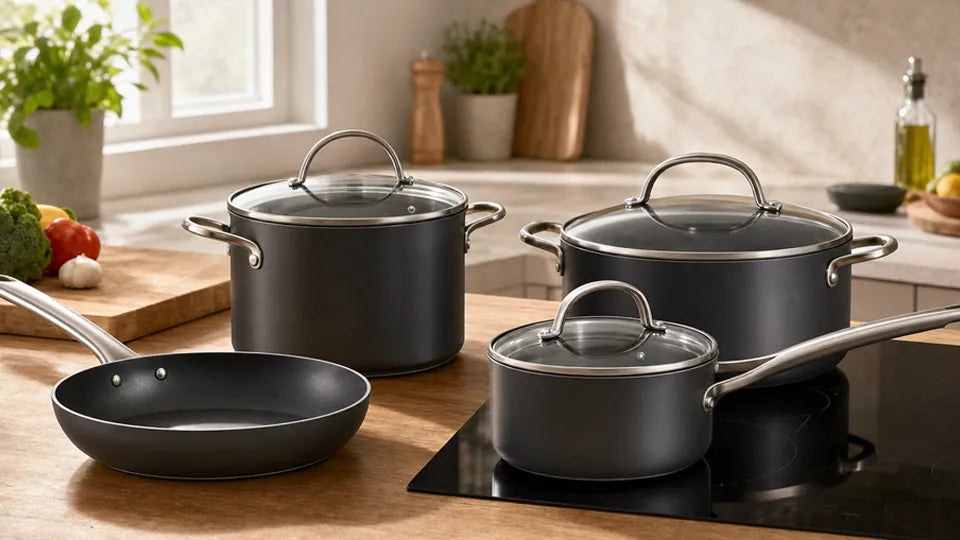
Hybrid cookware may combine a stainless structure, conductive core, magnetic base, and patterned nonstick surface. Its performance and care cannot be inferred from either “ceramic” or “stainless steel” alone.
Describe the entire verified construction. Calling a hybrid pan pure ceramic ignores its metal body, while calling it bare stainless steel ignores the coating that changes food release and care.
How Do the Surfaces Release Food?
Ceramic-coated and bare stainless surfaces release food through different combinations of material and technique. Ceramic nonstick reduces adhesion when intact and properly used. Stainless steel depends more heavily on preheating, oil, food moisture, and waiting for browning before turning.

Ceramic Coatings Simplify Delicate-Food Release
Eggs, pancakes, and tender fish can release more easily from a maintained ceramic nonstick surface. Low to medium or moderate heat is usually the appropriate range unless the exact care guide states otherwise.
Nonstick does not mean no oil is ever needed. A thin coating or small amount can support cooking and surface care when recommended by the manufacturer.
Stainless Steel Requires Heat and Oil Control
Bare stainless steel is not naturally nonstick. Preheat gradually, add suitable oil, and dry the food surface before placing it in the pan. Protein often releases more readily after a browned crust forms, while moving it too early can cause tearing.
Avoid treating the one-droplet test as a universal temperature rule. Pan thickness, burner power, food, and oil all affect the result, and overheating an empty pan can cause discoloration or place unnecessary thermal stress on the cookware.
Cooking Technique Changes the Final Result
Food temperature, moisture, crowding, and timing can matter as much as the surface. Cold wet ingredients reduce pan temperature and release water, while crowding can create steam that limits browning.
Use a food thermometer when safety is the concern. The USDA food thermometer guidance explains that color and grill marks do not reliably establish a safe internal temperature.
Which Material Produces Better Browning?
Bare stainless steel generally gives the cook more direct control over fond and deglazing, while ceramic nonstick is better positioned for gentler release-focused cooking. A ceramic-coated surface can still brown food, but prolonged excessive heat should not be used to force a darker crust.

Stainless Steel Encourages Fond Development
Fond is the browned residue that remains after food cooks on a metal surface. It can supply concentrated flavor for a sauce when the pan is deglazed with water, stock, wine, or another recipe-appropriate liquid.
Browning does not seal juices inside meat. It develops color, aroma, and savory flavor through reactions at the surface, while internal moisture depends on time, temperature, cut, and resting.
Ceramic Nonstick Favors Gentler Cooking
Ceramic nonstick suits foods that benefit from controlled heat and easy turning. It can brown at moderate settings, but it should not be promoted as cookware for prolonged high-heat use.
Dry the food, leave space between pieces, and allow the pan to recover heat between batches. These choices improve color without relying on excessive burner settings.
Stainless Steel Simplifies Deglazing
After browning, remove excess fat if needed, add a suitable liquid, and scrape the fond with an appropriate utensil. The liquid dissolves browned material into the sauce.
Deglazing should match the recipe and pan condition. Keep flames away from alcohol containers, and do not add cold liquid to a severely overheated or damaged vessel.
Which Cooking Methods Suit Each Material?
Ceramic and stainless steel overlap in everyday cooking, but their strongest uses differ. Ceramic-coated cookware helps with release-sensitive foods, while stainless steel favors browning and sauce building. Simmering can work in either when the vessel has suitable capacity and construction.
Ceramic Suits Eggs and Delicate Proteins
Use moderate heat, a small amount of appropriate fat when recommended, and non-damaging utensils. Avoid cutting food in the pan or stacking unprotected metal cookware on the coating.
For fish or poultry, easy release does not determine safety. Follow the USDA safe minimum temperature chart for the specific food and any required rest time.
Both Can Handle Everyday Simmering
Sauces, grains, soups, and reheating can work in either type when the vessel has suitable volume and the manufacturer permits the ingredients and heat. A lid can reduce evaporation, but confirm it is included and observe its separate oven limits.
Stainless steel cookware is commonly used for acidic foods, but people with a diagnosed nickel sensitivity may need individualized guidance. Harvard’s overview of dietary nickel notes that acidic cooking in stainless steel can increase nickel content, although dietary amounts and individual sensitivity vary.
How Do Durability and Maintenance Compare?
Stainless steel generally tolerates more surface wear, while ceramic coatings require greater protection from abrasion and overheating. Neither material is maintenance-free. Following the exact care guide matters more than applying a universal rule to every product in the category.
Ceramic Coatings Need Surface Protection
Avoid prolonged excessive heat, thermal shock, and utensils that the manufacturer prohibits. Allow the pan to cool before washing and use nonabrasive cleaning tools unless the care guide expressly permits something stronger.
Dishwasher compatibility and recommended care are different questions. A coated pan may be labeled dishwasher safe while hand washing is still advised to help preserve coating performance.
Stainless Steel Resists Surface Wear
Bare stainless steel can tolerate scrubbing better than many coatings, but it can still stain, warp, or pit. Health Canada’s cookware use guidance advises adding salt after water boils to reduce the risk of surface pitting.
Mineral deposits and heat tint can be cosmetic, but follow the manufacturer’s cleaning instructions and inspect any unexplained surface change before continued use. Do not use harsh chemicals or abrasives simply because the surface is metal.

Each Material Requires Different Cleaning Methods
For coated cookware, begin with warm soapy water and a soft sponge. For stainless residue, soaking and a compatible cleaner may help, but sudden temperature changes should still be avoided.
Inspect rivets, handles, lids, and bases as well as the cooking surface. A loose handle or unstable warped base can justify removal from service even when the interior looks acceptable.
Should You Choose One or Use Both?
Choose one category only when its strengths match nearly all your regular cooking. Otherwise, a mixed collection is often more practical: use a coated pan for delicate foods and stainless steel for browning, fond, and pan sauces. A verified hybrid product can provide a middle path but does not erase care requirements.
The main options can be compared by the cooking job they handle best:
| Approach | Best For | Technique Needed | Main Care Priority |
|---|---|---|---|
| Ceramic nonstick | Eggs, pancakes, delicate fish | Moderate heat and gentle turning | Protect the coating |
| Bare stainless steel | Browning, fond, pan sauces | Preheating and oil control | Manage residue and stains |
| Mixed collection | Different cooking tasks | Match each food to a surface | Follow separate care routines |
| Hybrid construction | Easier release with a steel structure | Follow model-specific guidance | Protect the structured coating |
Stainless steel induction compatibility still needs separate confirmation because not every stainless alloy or base interacts with a conventional induction element.
We use a hybrid construction rather than a purely ceramic or bare stainless steel cooking surface. Our hybrid construction overview describes a 304 stainless layer, aluminum core, 430 magnetic stainless base, and structured ceramic nonstick surface. The available sizes in our hybrid frying pan collection can be compared according to the capacity and cooking tasks your kitchen needs.
Choose Between Ceramic and Stainless Steel Cookware
List the foods you cook most, then decide where easier release or stronger fond development matters. If a hybrid surface fits that balance, compare the exact pieces in our cookware sets rather than treating the line as pure ceramic or pure stainless steel cookware. The best choice between ceramic and stainless steel cookware is the one that matches your cooking technique, heat habits, induction needs, storage, and preferred care routine.
Common Questions About Ceramic and Stainless Steel Cookware
Q1. Is Ceramic Nonstick the Same as Enameled Cookware?
No. Ceramic nonstick usually describes a coating designed to help release food, while enamel is a glass-like finish fused to a cookware body. Their care, cooking behavior, and product construction should be checked separately.
Q2. Can Ceramic-Coated and Stainless Steel Cookware Go Under a Broiler?
It depends on the exact product. The pan body, coating, handle, lid, and knob may have different temperature restrictions, so broiler use should be confirmed in the manufacturer’s instructions rather than inferred from the surface material.
Q3. Can Food Be Stored Overnight in Ceramic or Stainless Steel Cookware?
Sometimes, but storage suitability depends on the food, coating, and manufacturer’s guidance. Acidic or salty foods may interact with some metals, while prolonged storage can also stain or affect certain coated surfaces.
Q4. Does Ceramic-Coated Cookware Need Seasoning?
It depends. Some manufacturers recommend an initial oil treatment, while others do not recommend seasoning at all. Follow the care instructions for the exact coating instead of applying a universal seasoning routine.
Q5. Can Ceramic and Stainless Steel Pans Share the Same Lid?
Sometimes, if the diameter, rim shape, and fit match. A lid that rests loosely or interferes with a handle should not be treated as interchangeable, and its oven limit must still be checked separately.