How to Stop Food From Sticking to a Frying Pan
Dealing with food sticking to pan surfaces can turn a simple meal into a frustrating cleanup. Whether you are using traditional metal or modern nonstick pans, understanding the physics of heat and surface tension is essential for better results. This guide explains why sticking occurs and provides practical techniques to maintain a smooth cooking surface. By following these professional tips, you can extend the life of your cookware and enjoy a more efficient, stress-free experience in the kitchen every day.
Why Does Food Stick to a Frying Pan?
To solve the problem of sticking, you must first understand the relationship between the food’s proteins and the pan’s surface. Chemical bonds or physical traps cause most sticking issues on the microscopic level.

Chemical Bonding of Proteins
When protein-rich foods like eggs, fish, or chicken come into contact with a metal pan, they can form chemical complexes with the metal atoms. This is particularly common in stainless steel or cast iron. If the pan is not properly prepared, these bonds act like glue, making it nearly impossible to flip the food without tearing it. Even in a high-quality nonstick frying pan, if the coating is compromised, these proteins can find purchase on the underlying material.
Microscopic Pores and Surface Roughness
Under a microscope, even a smooth-looking pan has tiny pores and fissures. As the pan heats up, the metal expands, and these pores can "grab" onto the food. When moisture from the food enters these pores and turns to steam, it can sometimes help release the food, but if the heat is incorrect, the food simply solidifies inside these cracks. This physical anchoring is a primary reason for food sticking to pan interiors during the early stages of cooking.
The Buildup of Carbonized Oils
Over time, oils and fats can break down and leave a sticky, invisible film on the surface. This is known as carbonization. This layer is not easily removed by standard washing and creates a tacky surface that attracts and holds onto new food particles. This is a frequent issue with ceramic nonstick pans, where the slick surface can gradually become dull and grippy due to accumulated microscopic residue from previous cooking sessions.
Preheat the Pan the Right Way
One of the most effective methods for preventing sticking is proper temperature management before the food ever touches the surface. A cold pan is almost guaranteed to cause issues with delicate ingredients.

Managing Temperature Uniformity
Ensure the pan sits centered on the burner to allow for even heat distribution. If one side of the pan is significantly cooler than the other, the food in the cooler zone will likely stick while the food in the hot zone sears. Giving the pan two to three minutes to warm up on a medium setting allows the base to distribute the thermal energy evenly, which is a key step in how to prevent sticking during the cooking process.
The Water Droplet Test
For metal pans, you can use the "Leidenfrost Effect" to check for readiness. Sprinkle a few drops of water onto the preheated surface. If the water sizzles and evaporates immediately, the pan is not ready. If the water beads up and "dances" across the surface like a marble, the pan has reached the optimal temperature. This creates a thin layer of steam that acts as a physical barrier between the metal and your food.
Preheating Nonstick Surfaces Safely
While you should preheat metal pans thoroughly, nonstick pans require a more cautious approach. You should avoid heating an empty nonstick skillet for an extended period, as this can degrade the coating. Instead, add a small amount of oil as the pan warms up. The oil will shimmer when it is ready. This ensures the surface is prepared without subjecting the nonstick chemicals to unnecessary stress before the food arrives.
Use the Right Amount of Oil or Fat
Even the best nonstick skillet performs better with a small amount of lubrication. Fat acts as a secondary barrier that fills the microscopic pores of the pan and prevents direct protein-to-metal contact.
The type of oil you use depends on the recipe and the pan material. Oils with higher smoke points, such as avocado or grapeseed oil, are less likely to break down and become tacky. If an oil breaks down too quickly, it can actually contribute to sticking. For ceramic nonstick pans, it is generally recommended to avoid aerosol cooking sprays, as they often contain additives that can build up a gummy residue that ruins the nonstick properties over time.
Butter contains milk solids and water, which provide a visual cue for temperature. When the foam subsides, the butter is at the right temperature for adding eggs. The fats in butter are excellent for preventing sticking in a nonstick frying pan, as they provide a rich, slippery layer. However, ensure that the food itself is as dry as possible before adding it to the fat. Excess external moisture on a piece of meat can lower the temperature of the oil instantly, leading to a poor sear and increased sticking.
Control Heat Instead of Always Using High Settings

Many home cooks mistakenly believe that higher heat leads to faster, better cooking. In reality, excessive heat is the leading cause of both ruined meals and damaged cookware.
Standard nonstick coatings are designed to operate most efficiently at low to medium temperatures. Subjecting these pans to extremely high flames can cause the coating to lose its molecular bond with the pan. Once this happens, the pan will permanently lose its slickness. To preserve the effectiveness of your nonstick pans, try to stay within the medium range of your stovetop's dial for the majority of your tasks.
Medium heat allows for a gradual and even Maillard reaction (browning). If the heat is too high, the outside of the food burns and bonds to the surface before the internal structure has a chance to firm up and release. By using a steady, moderate temperature, you allow the food to develop a crust that naturally "lifts" off the pan. This patient approach is the secret to moving food easily without leaving half of it behind on the surface.
Match the Pan to the Food
Selecting the right tool for the specific ingredient is a vital skill. Not every pan is suitable for every type of food, and forcing a mismatch often leads to food sticking to pan surfaces.
Using Nonstick for Delicate Proteins
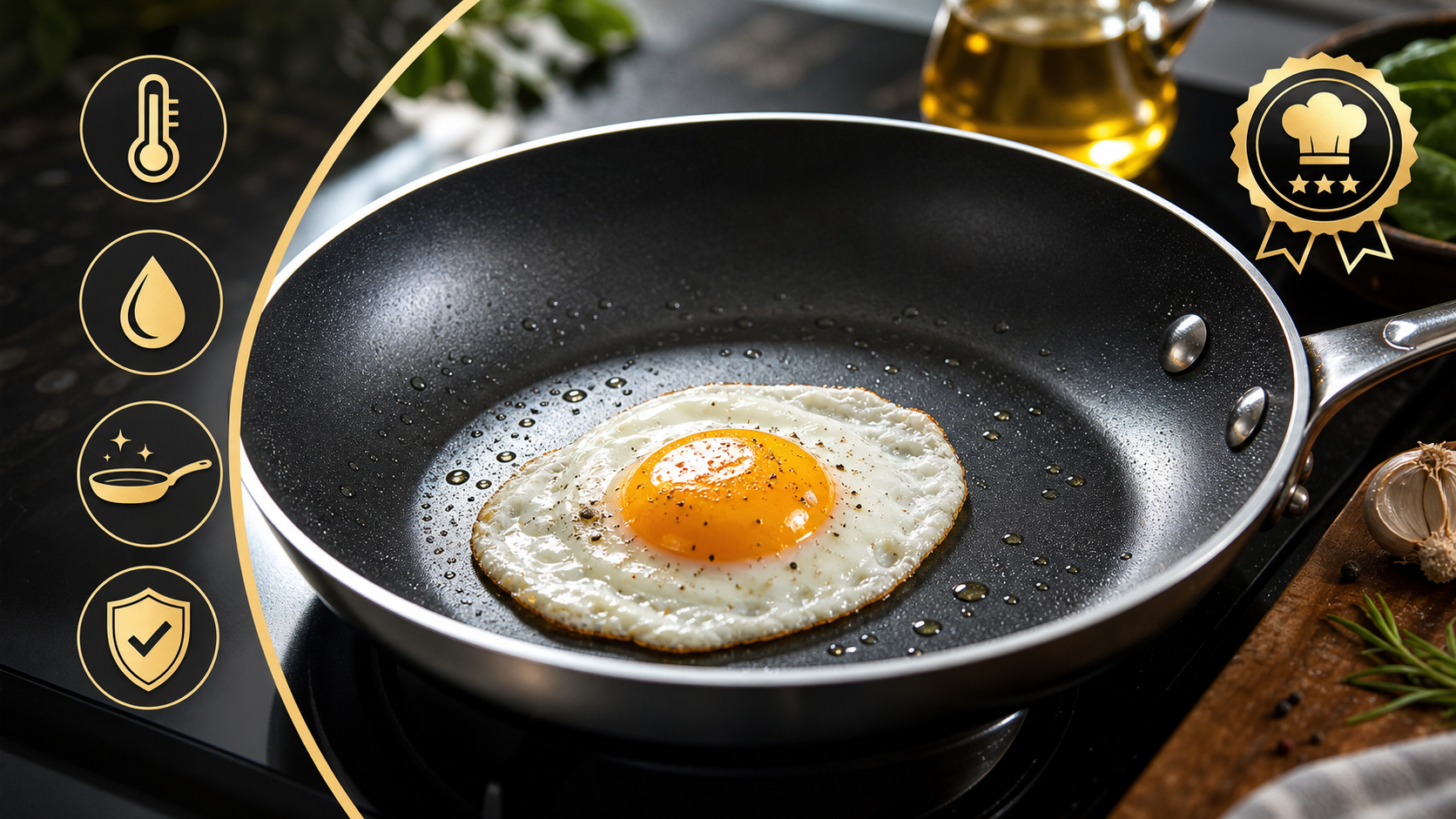
Delicate items like eggs, crepes, and flaky white fish should almost always be cooked in a nonstick frying pan. These foods have very little structural integrity and are prone to breaking if they experience even a minor amount of sticking. Using the best nonstick skillet for these tasks ensures that you can use minimal fat while still achieving a perfect, sliding release.
Searing and Deglazing in Metal
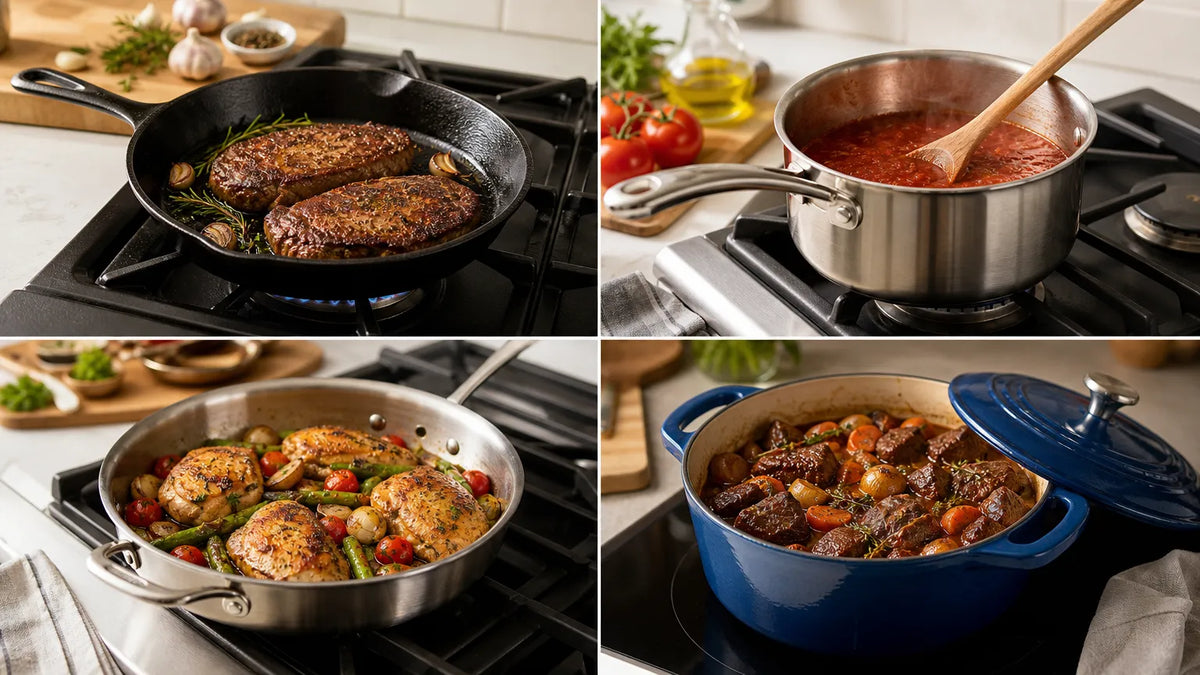
Conversely, if you are looking to develop a deep crust on a steak or a pork chop, a stainless steel or cast iron pan is often preferred. These pans are designed to hold onto the food initially to create a "fond" (the brown bits). The key is to wait for the food to naturally release once the sear is complete. If you try to move a piece of meat and it resists, it is usually telling you that the sear is not yet finished.

Clean Residue That Causes Sticking
A pan that looks clean to the eye may still have microscopic layers of burnt protein or oil that will cause future sticking. Maintaining the surface is just as important as the cooking technique itself.
Deep Cleaning Ceramic Nonstick Pans
Ceramic nonstick pans are particularly sensitive to "invisible" buildup. If your ceramic pan is starting to lose its release properties, try a deep clean using a soft sponge and a paste of baking soda and water. This gently abrasive mixture can lift the carbonized oil without scratching the ceramic layer. Regularly removing this buildup is a critical part of how to prevent sticking over the long term.
Avoid Abrasive Tools and Dishwashers
To keep your nonstick pans in top condition, always avoid steel wool or harsh scouring pads. These create tiny scratches that provide a perfect home for food particles to hide and stick. Additionally, while many modern pans are labeled as dishwasher safe, the harsh chemicals and high-pressure water can dull the surface and accelerate the loss of nonstick properties. Hand-washing with mild soap and a soft cloth is the most reliable way to maintain a smooth surface.

Know When a Pan Needs Replacing
No matter how well you care for your cookware, every pan has a functional lifespan. Continuing to use a worn-out pan is inefficient and can lead to poor cooking results.
If you are using a nonstick frying pan and notice the coating is visibly flaking or peeling, it should be replaced immediately for safety and performance reasons. Similarly, if the surface has become permanently stained and even a deep clean does not restore its slickness, the nonstick properties have likely been exhausted.
When it is time for an upgrade, look for pans with multi-layered, reinforced coatings. The best nonstick skillet options often feature a heavy base that resists warping, ensuring the pan stays flat on your burner for years. Investing in high-quality nonstick pans that use durable materials will ultimately save you money by reducing the frequency of replacements and ensuring consistent, stick-free performance for hundreds of meals.
Prevent Food from Sticking Easily
Stopping food from sticking requires a combination of the right equipment, proper preheating, and careful heat management. By matching your ingredients to the correct nonstick frying pan and maintaining a clean, residue-free surface, you can ensure consistent food release. Remember that patient cooking at moderate temperatures is often the most effective way to manage food sticking to pan issues. Invest in quality tools, follow these maintenance steps, and enjoy professional results in your home kitchen.
FAQs about Nonstick Pan Sticking
Why is my food sticking to my nonstick pan all of a sudden?
This is a common issue often caused by the buildup of carbonized oil or protein residue. Over time, a thin, invisible film can form on the surface that creates a tacky texture. A deep clean with a non-abrasive cleanser or a baking soda paste can often restore the pan's original release properties.
Is it better to use oil or butter to prevent sticking?
It depends on the heat level. Butter is excellent for lower-temperature tasks like eggs because it contains milk solids that help with release. However, for longer cooking times, an oil with a higher smoke point is often more reliable. Using a combination of both can also provide a balance of flavor and high-performance lubrication.
Can I fix a nonstick pan that has lost its slickness?
Generally, no. Once the chemical coating of a nonstick frying pan has been scratched away or degraded by excessive heat, it cannot be truly "re-coated" at home. While deep cleaning can remove residue, it cannot repair physical damage to the nonstick layer itself.
Why do ceramic nonstick pans seem to stick more over time?
Ceramic nonstick pans can lose their effectiveness if they are not cleaned perfectly after every use. Because ceramic is very hard, it can develop microscopic "cracks" if subjected to rapid temperature changes, and oil can get trapped in these areas, leading to a loss of the original nonstick effect.
Does the material of the pan handle matter for sticking?
No, the handle material does not affect whether food sticks to the interior surface. However, a high-quality handle that stays cool allows you to maneuver the pan more easily, which can help you tilt or shake the pan to assist with food release during the cooking process.