What Is a Saucepan? Uses, Sizes, and How to Choose the Right One
If you have ever wondered whether you need a saucepan, a saucier, a small saucepan, or a large stainless steel pot, the answer depends on what you cook most. A saucepan is not always the flashiest piece of cookware, but it is one of the most practical tools in everyday kitchens.
This guide explains what a saucepan is, what it is used for, how it compares with a saucier, and what size or material you should choose.
What Is a Saucepan?
A saucepan is a medium-depth cooking vessel used mostly for liquid-based cooking.
It usually features:
- Tall, straight sides
- A flat bottom
- One long, ergonomic handle
- A tight-fitting lid
- A capacity between 1 and 4 quarts
The shape makes it especially useful for heating liquids without spilling. Because the sides are taller than a frying pan or skillet, a saucepan is better for simmering, boiling, and reducing small amounts of food.

What Is a Saucepan Used For?
A saucepan is designed for cooking foods that require water, milk, broth, sauce, or gentle simmering.
Common culinary uses include:
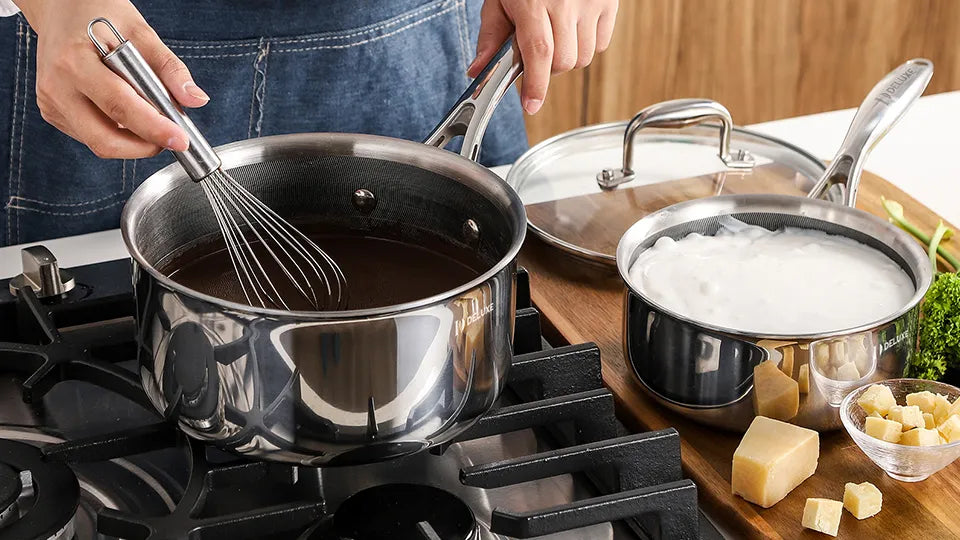
- Making sauces and gravies
- Heating soup and broth
- Cooking oatmeal and porridge
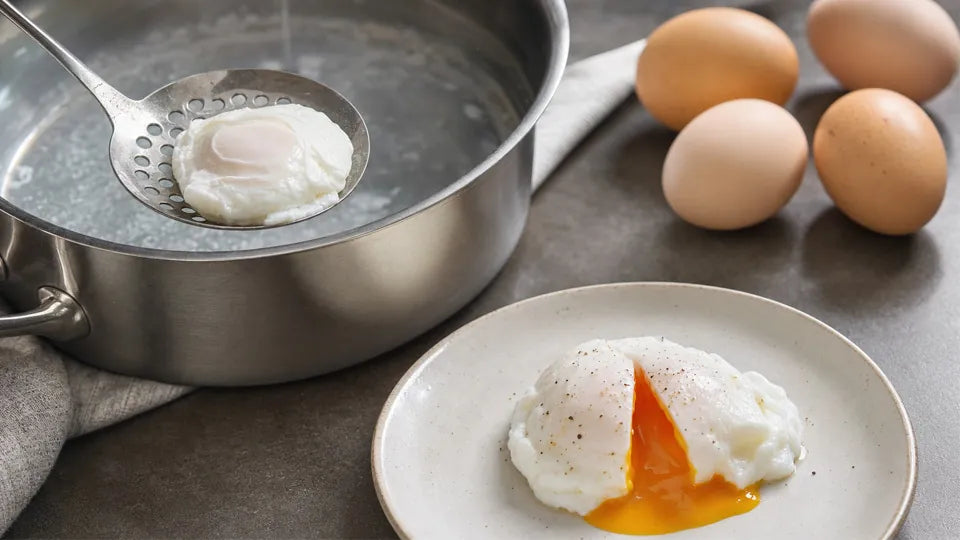
- Boiling eggs
- Preparing rice and grains
- Cooking instant noodles or ramen
- Scalding milk
- Melting butter or chocolate
- Reheating leftovers
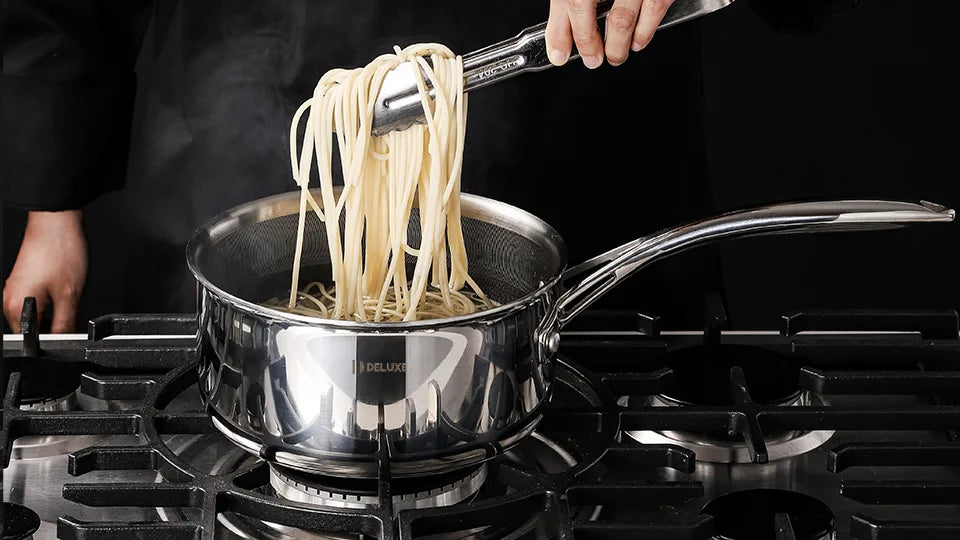
- Cooking small portions of pasta
- Simmering beans, lentils, or dal
- Preparing custard and pudding
For many home cooks, a saucepan is the pan they reach for when they do not need a large stockpot but require more depth than a standard skillet.
Saucepan vs. Pot: What’s the Difference?
A saucepan is technically a type of pot, but not all pots are saucepans.
The primary distinctions lie in capacity and handle configuration.
| Cookware Type | Design & Shape | Best For |
|---|---|---|
| Saucepan | Tall straight sides, single long handle, 1–4 qt | Sauces, oatmeal, ramen, small soups |
| Stockpot | Deep vertical sides, dual loop handles, large capacity | Pasta, bone broth, large batch soups |
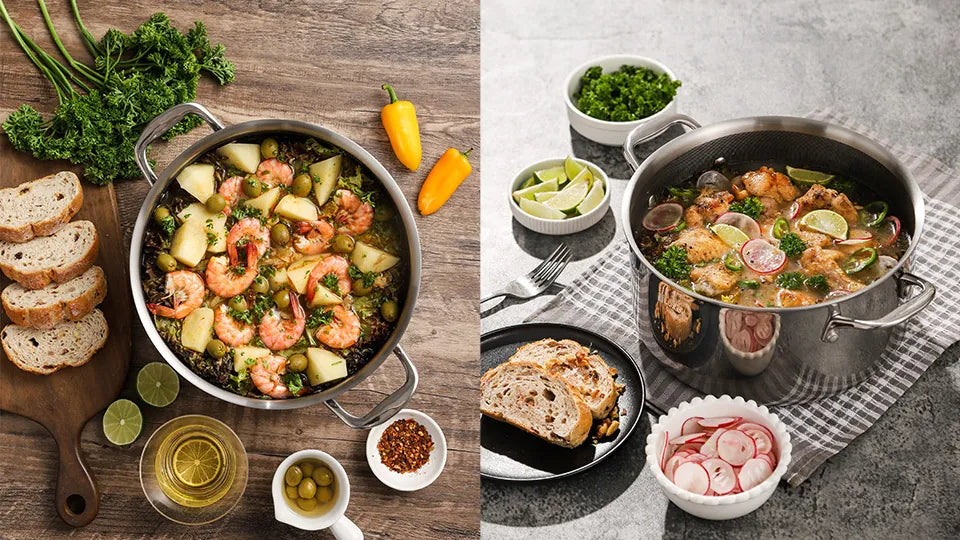
| Sauce Pot | Similar depth to a saucepan with two loop handles | Soups, stews, hearty sauces |
| Sauté Pan | Wide flat base, vertical sides, long handle | Searing, shallow frying, deglazing |
| Saucier | Flared, curved sides, wide opening, long handle | Whisking, reduction sauces, risotto |
If you cook for one or two people, a small saucepan is often more practical than a heavy stockpot. If you prepare family-sized pasta or stew, a larger pot or dedicated cookware set remains essential.

Saucepan vs. Saucier: Which One Is Better?
A common kitchen dilemma is choosing between a saucepan vs. saucier.
A saucier features rounded, bowl-like walls, whereas a traditional saucepan has straight, vertical sides.
Choose a Saucepan If You Need:
- A versatile, budget-friendly everyday pan
- Compact, nested storage within cookware sets
- Controlled, slower liquid evaporation
- A stable, level base for steamer inserts
- Reliable contact on electric, ceramic glass, or induction cooktops
- An efficient footprint for compact kitchens
Choose a Saucier If You Need:
- Effortless whisking without corner buildup
- Faster liquid reductions
- Smooth stirring for risottos and custards
- Precise temperature control for delicate emulsions
- Quick wipe-down cleaning
Many professional chefs prefer sauciers for delicate sauces because the curved perimeter prevents food from scorching in sharp corners.
However, saucepans remain an indispensable kitchen staple because they are versatile, space-efficient, and universally compatible with standard cookware sets.
The Verdict: A saucier excels at gourmet sauce-making, while a saucepan offers superior versatility for everyday boiling, simmering, and reheating.

What Size Saucepan Do You Need?
The ideal saucepan capacity depends on your household size and regular cooking habits.
| Capacity | Recommended Cooking Tasks |
|---|---|
| 0.75 to 1.5 Quart | Melting butter, single sauces, baby food, hard-boiled eggs |
| 2 Quart | Oatmeal, ramen noodles, rice, individual soups |
| 3 Quart | Small pasta portions, steamed vegetables, batch sauces |
| 4 Quart | Medium soups, whole grains, family-sized side dishes |
For most households, a 2-quart or 3-quart model represents the ultimate sweet spot for everyday versatility.
Solo cooks will get extensive mileage out of a compact 1.5-quart saucepan, while larger families benefit from adding a 3-quart or 4-quart pan from a complete cookware set.
Can You Fry in a Saucepan?
Yes, but only for specific, small-scale culinary tasks.
A saucepan works well for:
- Shallow-frying small batches
- Heating cooking oil for flash frying
- Pan-steaming potstickers and dumplings
- Simmer-frying aromatics and curry pastes
- Crisping garlic chips or infusing chili oil
However, a saucepan is not suited for broad surface frying. For frying eggs, flipping pancakes, or searing proteins, a dedicated frying pan, skillet, or traditional wok provides far better heat distribution and spatula clearance.
Use a saucepan when depth and containment matter; switch to a skillet when surface area and moisture evaporation are your priorities.

How to Choose the Best Saucepan
When selecting a high-performance saucepan, prioritize core build quality and ergonomic design over marketing hype.
1. Pick the Right Size
A 2 to 3-quart capacity covers over 80% of routine residential cooking tasks. Select 1 to 1.5 quarts for light single-portion cooking, or step up to 4 quarts if you frequently prepare pasta or grains for a family.
2. Select the Right Pan Material
Choose heavy-gauge stainless steel for maximum durability and high-heat browning.
Choose ceramic nonstick for non-toxic cooking, smooth food release, and effortless cleanup.
Choose hybrid stainless steel and ceramic nonstick to combine the scratch resistance of steel with the slick food release of modern coatings.
3. Evaluate the Lid Construction
A precision-fitted lid retains steam and accelerates boiling times. Tempered glass lids provide real-time visual monitoring, whereas solid stainless steel lids offer maximum drop resistance.
4. Inspect Handle Ergonomics and Safety
Look for hollow, stay-cool cast handles with reinforced stainless steel rivets. Confirm whether the assembly is oven-safe and rated to at least 450°F to 500°F.
5. Verify Cooktop Compatibility
For induction ranges, ensure the pan features a magnetic stainless steel base plate. For smooth glass-top ranges, select a completely flat, warp-resistant bottom to avoid thermal hotspots.

Tips for Getting the Most from Your Saucepan
Small adjustments in temperature management and technique significantly improve cooking performance and cookware longevity.
For Delicate Sauces
Cook over low to medium heat and stir continuously along the perimeter. If an emulsion threatens to break or scorch, remove the pan from heat immediately and whisk vigorously.
For Pasta and Grains
Never fill a saucepan past two-thirds capacity to avoid starchy boil-overs. A 3-quart saucepan provides the ideal volume for preparing fresh ramen, mac and cheese, or grains without overcrowding.
For Oatmeal and Porridge
Bring liquids to a boil on medium heat, stir in oats, and immediately drop to low. Use a silicone spatula to scrape the bottom seam and prevent starches from scorching.
For Reheating Soups
Cover with the lid to trap ambient moisture and prevent unwanted sauce thickening. Stir halfway through to ensure even core heating.
For Steaming Vegetables
Straight-sided saucepans provide a secure, wobble-free base for standard collapsible or drop-in steamer baskets.
Final Thoughts on Saucepans
A saucepan is a high-sided, flat-bottomed pan engineered for sauces, grains, soups, and everyday boiling. It serves as an essential foundation in any cookware collection, delivering deep-pan functionality without the bulk of a heavy stockpot.
While a rounded saucier excels at specialized reductions, a standard saucepan delivers unmatched versatility, reliable stacking, and stable cooktop contact for daily meal preparation.
For most home chefs, a 2-quart or 3-quart hybrid saucepan provides the ultimate balance of heat control, capacity, and simple cleanup.
Frequently Asked Questions
What is the difference between a saucepan and a frying pan?
A saucepan features tall, vertical walls designed to contain liquids and prevent boil-overs. A frying pan features low, flared sides and a broader flat surface to promote rapid evaporation, searing, and easy flipping.
Can a saucepan go in the oven?
Many saucepans are oven-safe, provided they feature all-metal handles and no plastic components. Always confirm the manufacturer's maximum oven temperature rating before baking or broiling.
Can I use a saucepan instead of a pot?
Yes, for small to medium culinary tasks. For large-batch stocks, whole poultry, or family-sized pasta bakes, a high-capacity stockpot remains the better tool.
What is a saucepan with two handles called?
A saucepan with two loop side handles instead of one stick handle is called a saucepot or casserole pot. The dual handles make lifting heavy liquids safer and more balanced.
Is a ceramic saucepan safe?
High-quality ceramic nonstick saucepans are 100% non-toxic and free from PTFE, PFOA, lead, and cadmium. To preserve the coating, use wooden or silicone utensils and wash by hand with gentle detergents.