3-Ply vs. 5-Ply Cookware: What Changes in Everyday Cooking?
The difference between 3-ply and 5-ply cookware is not simply that five is better than three. 5-ply stainless steel cookware may spread and retain heat differently, but total thickness, core metals, shape, and balance often matter more. A well-designed 3-ply pan can feel quicker and lighter, while a heavier 5-ply pan may feel steadier. Choose the construction that matches your stove, recipes, and handling needs.
What Do 3-Ply and 5-Ply Describe?
Ply describes bonded material layers in a pan body, but manufacturers may count or describe specialized surface components differently. Read the construction diagram instead of treating the number as a universal recipe.

Count Bonded Layers Rather Than Visible Finishes
Traditional 3-ply stainless steel cookware often sandwiches an aluminum core between stainless steel faces. A conventional 5-ply design commonly places several conductive layers between stainless steel faces.
Use this quick reading order:
- Find the maker’s layer diagram.
- Identify each metal and its position.
- Check whether cladding reaches the sidewalls.
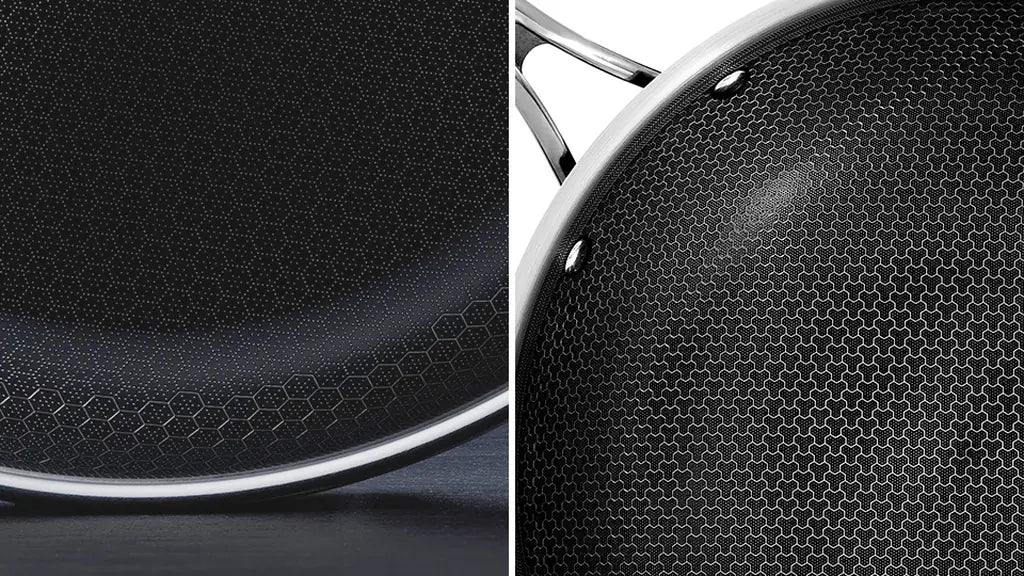
- Look for a separate coating or textured surface.
| Label | Common Metal-Body Pattern | What the Label Does Not Confirm |
|---|---|---|
| 3-ply | Stainless steel, conductive core, stainless steel | Core thickness, pan weight, or full-wall cladding |
| 5-ply | Stainless steel around three internal layers | Metal proportions, responsiveness, or overall quality |
Separate Layer Count From the Cooking-Surface Material
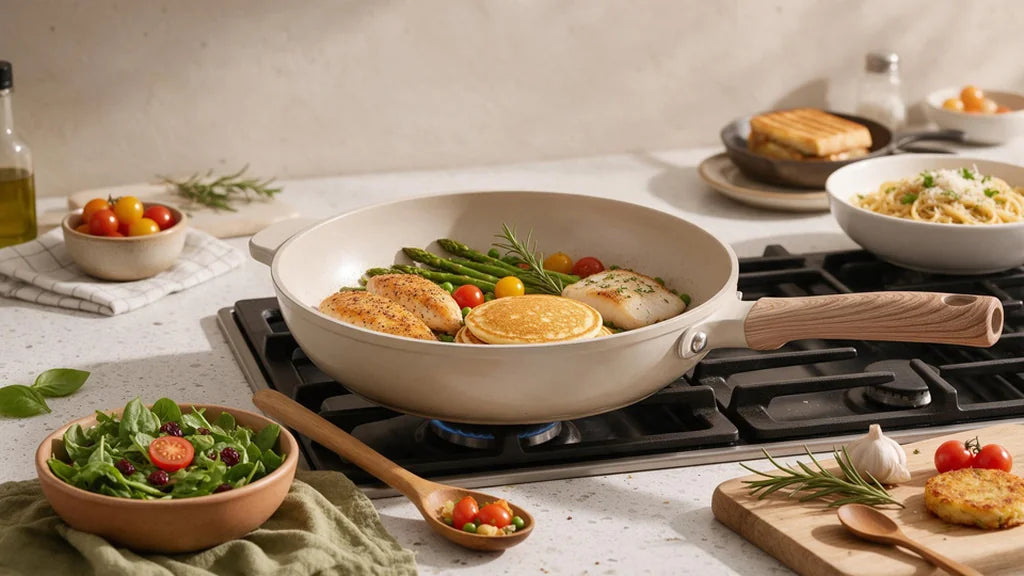
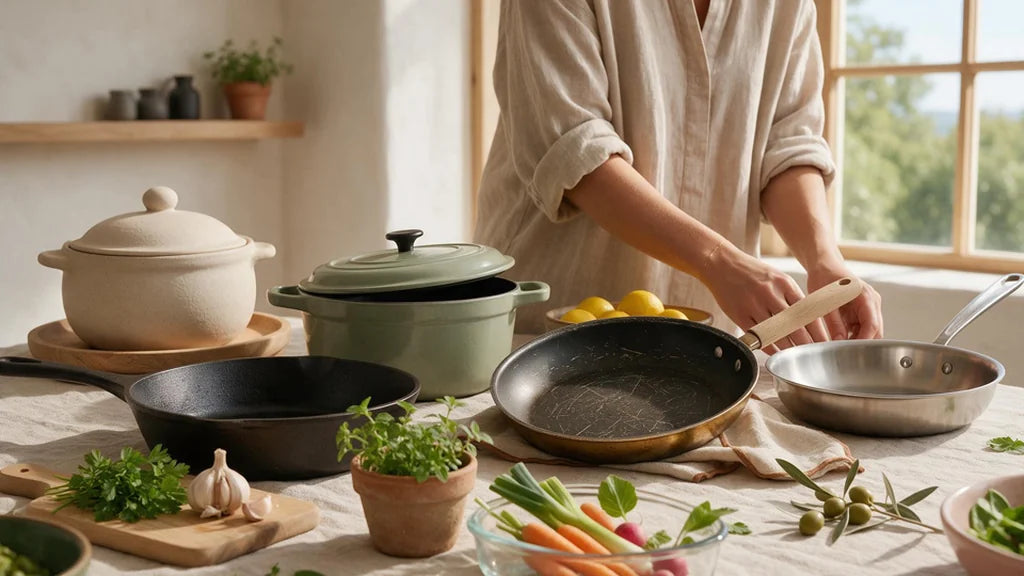
Ply and surface are separate questions. Bare stainless steel needs suitable preheating and oil, while a ceramic-coated surface has different food-release and care characteristics. This distinction matters in ceramic vs stainless steel cookware comparisons.
How Can Layer Design Affect Heating?
Layer design can change how quickly heat moves across a pan and how readily the pan follows a burner adjustment. Yet layer count alone cannot predict either behavior.
Compare Heat Spreading and Responsiveness
Conductive cores move energy away from the burner footprint. NIST thermal-conductivity data illustrate why aluminum and stainless steel play different roles. More conductive material can reduce temperature differences, while more mass can slow heating and cooling.
- Faster response helps with eggs, delicate sauces, and quick burner changes.
- Steadier heat helps when adding cool food or maintaining a gentle simmer.
- Burner size and contact remain important with either construction.
| Everyday Signal | A More Responsive Pan | A More Heat-Stable Pan |
|---|---|---|
| Burner turned down | Surface temperature changes sooner | Temperature changes more gradually |
| Cool food added | Larger temporary temperature drop is possible | Cooking temperature may recover more steadily |
| Pan moved off heat | Cooking slows sooner | Residual heat continues cooking longer |
Account for Total Thickness and Core Materials
Two pans with the same ply count may perform differently because their core thickness or metal arrangement differs. Compare:
- Total body thickness, when disclosed
- Core material and its thickness
- Full-body cladding versus a bonded base only
- Finished weight and pan geometry

Does More Ply Always Mean Better Performance?
No. More ply can support a particular design goal, but it does not guarantee faster heating, more even browning, or better durability.
Evaluate Design Quality Instead of Layer Count Alone
A sound bond, flat base, suitable thickness, and stable handle affect use. A well-executed 3-ply pan can outperform poorly proportioned 5-ply stainless steel cookware.
- Treat ply count as one specification, not a grade.
- Compare like sizes and shapes at similar weights.
- Favor disclosed materials over unexplained marketing labels.
- Check the rim and base for clean, even construction.
Balance Thermal Behavior With Cooking Style
The better pan behaves predictably. Thin sauces favor timely corrections, while frying and batch cooking may benefit from more heat capacity. Our DELUXE hybrid cookware design uses a 2.5 mm 3-ply body with an aluminum core, while the stainless steel structure supports durability and induction compatibility. Raised steel peaks and ceramic-coated valleys add easier food release and cleanup.
How Do Weight and Handling Compare?
Actual weight depends on metal amounts, diameter, walls, lid, and handle. Compare published weights, then test a loaded pan if possible.
Consider Loaded Lifting and Wrist Comfort
An empty-pan lift understates the task. Test handling this way:
- Add an amount of water similar to a normal meal.
- Lift from the stove to a nearby counter.
- Tip the pan as if pouring sauce.
- Repeat with the lid, if included.
Wrist strain or palm pressure can outweigh a small heating advantage.

Check Handle Balance and Storage Demands
Long handles add leverage but may crowd a stove or cabinet. Helper handles aid two-handed lifting, while coated cookware may need stacking protectors.
| Handling Point | Check in Store or at Home | Why It Matters |
|---|---|---|
| Balance | Grip an empty and loaded pan | Front-heavy cookware is harder to tip and carry |
| Handle clearance | Place it beside another pan | Crowded handles can interfere with safe positioning |
| Storage height | Stack with lids and protectors | More pieces or thicker rims require more space |
Which Construction Fits Everyday Meals?
Choose by temperature pattern rather than by prestige. Quick changes favor responsiveness, while long or high-volume tasks can reward thermal stability.
Match Responsiveness to Quick Temperature Changes
For custards, pan sauces, and quick vegetables, a responsive pan offers more immediate control. Burner type still affects the result.
Match Heat Retention to Longer Cooking Tasks
For braises, batches, and repeated additions, a substantial pan can lose less heat when ingredients enter. Move it sooner when food is nearly done.
- Pick responsiveness for rapid sauteing and delicate reductions.
- Pick stability for batches, shallow frying, and longer simmers.
- Pick comfortable handling when both thermal options suit the recipe.
What Should You Compare Beyond Ply Count?
Compare the base, rim, handles, cooktop fit, surface, care, and dimensions. These details may matter more than an extra pair of layers.
Verify Base, Rim, Handles, and Cooktop Fit
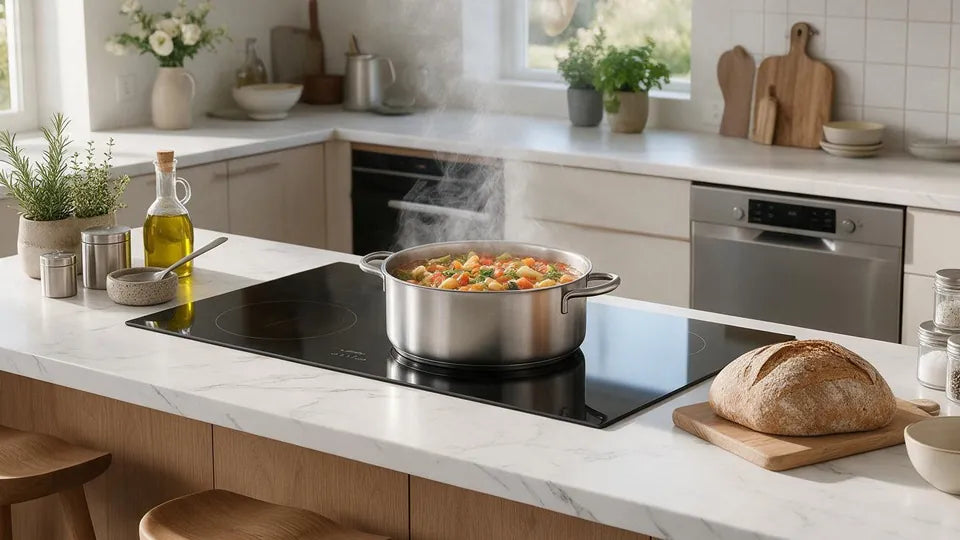
Stainless steel induction cookware needs a magnetic, flat base that works with the induction zone. The U.S. Department of Energy induction overview notes that flat cookware a magnet sticks to will work, but the maker’s compatibility statement remains the final check.
For cooks who want this balance across a coordinated kitchen setup, our 13-piece hybrid cookware set applies the same 3-ply body and hybrid cooking surface across the collection. Its 430 magnetic stainless steel base supports induction cooking, and the set is also listed for gas, electric, and ceramic cooktops. It fits kitchens where cooktop versatility matters as much as heating behavior.

Compare Care Requirements and Exact Product Specifications
The right care routine protects the performance you selected. For our hybrid cookware, start with low to medium heat, use a small amount of oil as needed, let the pan cool before washing, and clean it with warm soapy water and a soft sponge. Our proper use and care guide keeps these steps easy to follow and supports lasting everyday performance.
For bare stainless steel, choose a stainless steel cookware cleaner approved by the pan maker rather than assuming one method fits every finish. University of Arkansas Extension’s stainless steel cleaning formula uses baking soda and water, but an abrasive may mark polished or coated surfaces. Always defer to the cookware’s own care instructions.
Compare 5-Ply Stainless Steel Cookware for Your Kitchen
Your best choice begins with the meals you cook and the way you handle a loaded pan. If you value responsive heating, induction compatibility, and a surface designed for easier food release, our complete cookware collection brings those priorities together in a 3-ply body with a stainless steel and ceramic hybrid surface. Compare the available sizes and formats with your everyday recipes, then choose the pieces that feel practical for your stove, storage, and cooking routine.
FAQs About 3-Ply and 5-Ply Cookware
Q1: Can Multi-Ply Cookware Warp Over Time?
Yes, especially when a hot pan is exposed to cold water or repeatedly overheated. Bonded construction may improve stability, but it cannot eliminate warping under every condition. Let cookware cool before washing and follow the manufacturer’s heat guidance.
Q2: Do Cookware Lids Count Toward the Ply Number?
Usually not. Ply count normally describes the bonded construction of the pan or pot body. A lid may use glass, stainless steel, or another material with separate temperature and care limits, so check its specifications independently.
Q3: Can Metal Utensils Be Used With Layered Cookware?
It depends on the cooking surface. Bare stainless steel generally tolerates metal utensils, while ceramic-coated or other nonstick surfaces may require gentler handling. Follow the exact product instructions and avoid forceful scraping or utensils with sharp edges.
Q4: Why Can Stainless Steel Develop Rainbow Discoloration?
Rainbow-colored heat tint can appear when stainless steel is exposed to elevated temperatures. It is generally a surface appearance issue rather than proof that the bonded layers have separated. Use a cleaning method approved by the cookware manufacturer and avoid aggressive abrasives on polished or coated areas.
Q5: Is All Multi-Ply Cookware Dishwasher Safe?
No. Dishwasher compatibility depends on the surface, handles, rim construction, and manufacturer instructions rather than ply count. Even when a product is labeled dishwasher safe, hand washing may be recommended to help preserve a polished finish or ceramic-coated cooking surface.