How to Choose Non-Toxic Cookware: The Ultimate Guide for a Healthy Kitchen
If you’ve recently opened your kitchen cabinet and wondered whether your scratched frying pans are leaching hidden chemicals into your family’s meals, you are not alone.
With headlines warning against "forever chemicals" and toxic synthetic coatings, finding truly non-toxic cookware has become a top priority for health-conscious home cooks. However, navigating labels like "PFOA-Free," "Green," or "Eco-Friendly" can feel overwhelming.
In this guide, we’ll break down what makes cookware safe, compare the healthiest cookware materials on the market, and help you choose a set that delivers both peace of mind and professional cooking performance.
What Makes Cookware "Toxic"? (Chemicals to Avoid)
Before evaluating materials, it helps to understand what chemicals you want to keep out of your kitchen:

- PFAS, PTFE, and PFOA: PTFE is a fluoropolymer commonly classified within the broad PFAS family. PFOA was formerly used as a processing aid in the manufacture of some PTFE products. They break down very slowly in the environment and the human body.
- Overheated PTFE: PTFE-coated cookware should not be severely overheated, especially while empty. At sufficiently high temperatures, the coating can decompose and release gases that may be hazardous to health. These fumes can be especially dangerous to pet birds, so bird owners should keep birds away from cooking fumes and avoid overheating coated cookware.
- Heavy Metals (Lead & Cadmium): Cheap glazes on low-quality ceramic or low-grade metal alloys can leach lead or cadmium when exposed to acidic foods like tomatoes or vinegar.
| What to Avoid | What to Look For |
|---|---|
| PFAS / PFOA / PFOS | 18/10 Stainless Steel |
| Lead & Cadmium | Certified PFAS-Free Ceramic |
| Uncertified Glazes | Lab-Tested Food-Grade Materials |
Comparing the Safest Cookware Materials
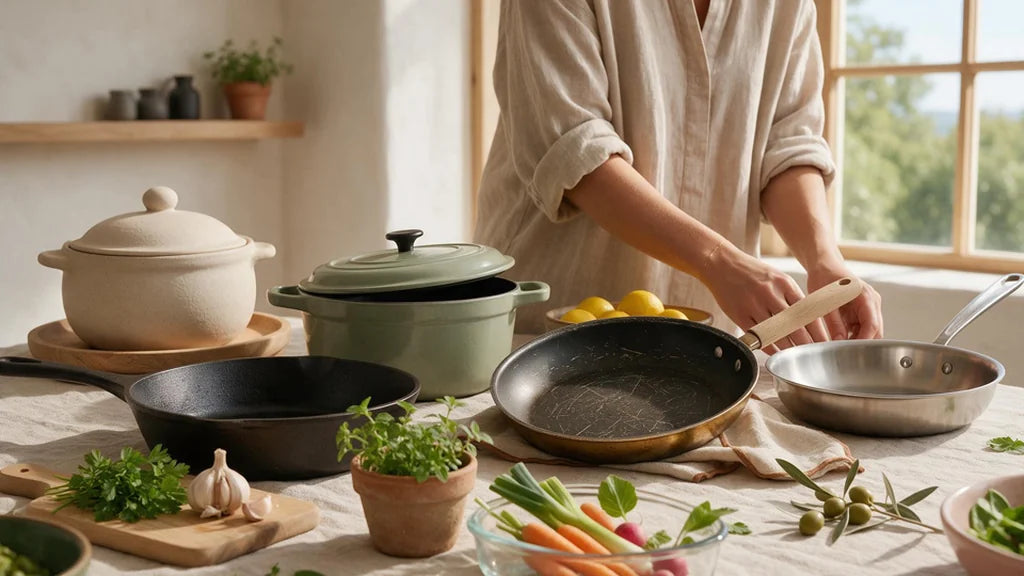
There is no single "magic" pan for every task. The healthiest kitchens often use a mix of materials tailored to different recipes. Here is how the top non-toxic materials compare:

1. Stainless Steel (The Professional Gold Standard)
If you ask professional chefs for the safest cookware material, high-grade stainless steel is almost always the top recommendation.
- Why it's non-toxic: Uncoated stainless steel is durable and highly resistant to corrosion. It is generally suitable for acidic foods, although small amounts of metals such as nickel or chromium may migrate under some cooking conditions.
- Best used for: Boiling, searing, sautéing, and making pan sauces. Look for 18/10 (304 grade) tri-ply or 5-ply construction, which encapsulates an aluminum core between steel layers for even heat distribution.
- Keep in mind: Stainless steel requires proper preheating and a dab of cooking fat to prevent delicate foods like eggs from sticking.
2. Cast Iron & Enameled Cast Iron
Cast iron is durable and can last for generations when properly maintained.
- Raw Cast Iron: A well-seasoned cast-iron surface can reduce sticking. Cast iron may also increase the iron content of some foods, depending on the recipe and cooking conditions.
- Enameled Cast Iron: Cast iron coated in smooth, fired glass enamel (like Dutch ovens). Its enamel surface is generally nonreactive and does not require seasoning when the cookware is intact and intended for food use.
3. Ceramic-Coated Cookware
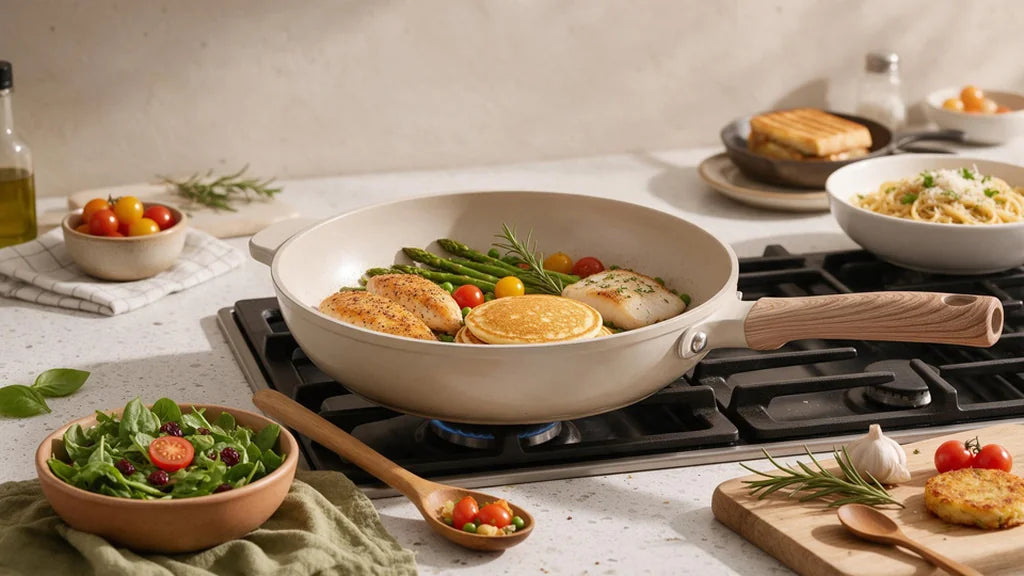
For cooks who want effortless food release without synthetic plastics, ceramic-coated cookware is the most popular alternative.
- Why it's safe: Made from mineral-based silica (sand), many ceramic coatings are marketed as PTFE-free or PFAS-free, but these claims should be verified for the specific product.
- Keep in mind: Pure ceramic coatings are somewhat delicate. Overheating or using metal utensils can cause micro-wear over time. (If your current ceramic pan is grabbing food, check out our troubleshooting guide on why nonstick pans become sticky).
4. 5-Ply Laser Hybrid Cookware (Safety + Durability + Nonstick)
If you love the slick convenience of ceramic nonstick but want the scratch resistance of stainless steel, modern material science created hybrid cookware.
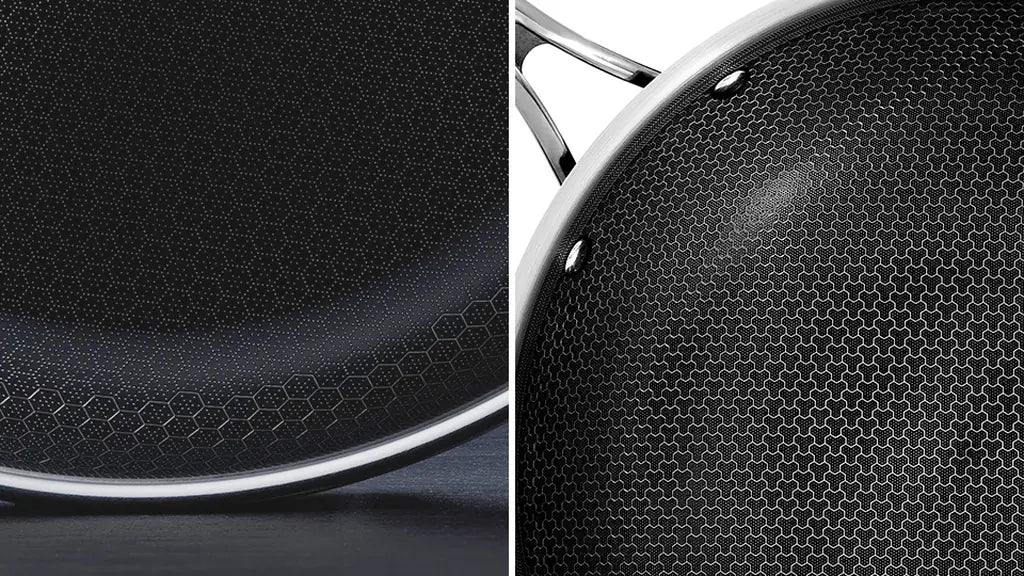
For instance, DELUXE Hybrid Cookware pairs a non-toxic ceramic layer with raised 304 stainless steel laser-etched ridges. The raised stainless steel ridges help reduce direct wear on the recessed ceramic nonstick coating, although sharp utensils and forceful scraping can still damage the surface.
Quick Buyer’s Decision Guide: Which Should You Choose?
| Material | Non-Stick Release | Durability | Best For |
|---|---|---|---|
| Stainless Steel | Requires Oil | Lifetime | Searing, boiling, everyday sauces |
| Enameled Cast Iron | Moderate | Lifetime | Dutch ovens, soups, braising |
| Pure Ceramic | Excellent (Initial) | 1–3 Years | Delicate eggs, low-heat frying |
| 5-Ply Hybrid | Excellent | 5+ Years | All-around daily cooking & searing |
3 Smart Tips for Buying Non-Toxic Cookware
1. Don't Feel Forced to Buy a Huge 10+ Piece Set
A common mistake home cooks make is buying giant uniform box sets filled with pieces they rarely use. Building a versatile kitchen works best when you mix and match core pieces based on your actual cooking habits:
- 1x Medium Stainless Steel Saucepan (for rice, soups, and boiling)
- 1x Large Skillet or Hybrid Pan (for everyday frying, searing, and eggs)
- 1x Enameled Dutch Oven (for slow cooking and baking)

2. Verify Material Transparency & Testing
Don't rely solely on front-of-box marketing claims. Look for brands that clearly disclose their construction layers and provide verified third-party documentation confirming their products are pfas free cookware.
3. Match Your Cooktop
Ensure the non-toxic cookware you select is compatible with your stove. If you use an induction cooktop, ensure the pan features a magnetic stainless steel base (such as 430-grade steel).
How to Keep Coated Cookware in Good Condition
Even the healthiest cookware requires proper care to maintain its integrity:
- Avoid Excessive Heat: High heat degrades nonstick properties and warps metal bases. Stick to medium or low heat for daily cooking.
- Hand Wash Gently: Dishwasher detergents and repeated machine washing can affect some cookware finishes. When recommended by the manufacturer, hand washing with a soft sponge may help preserve a coated surface.
- Use Soft Utensils: Wood, silicone, or nylon tools prevent micro-scratches on delicate ceramic surfaces.

Conclusion
Choosing non-toxic cookware doesn't mean sacrificing performance or spending a fortune on unnecessary cookware sets. By focusing on proven materials like 18/10 stainless steel, enameled iron, and certified ceramic hybrid designs, you can cook delicious meals with total confidence.
Questions About Healthy Cookware
Is 18/10 stainless steel safe for cooking acidic foods?
Yes. 18/10 stainless steel contains 18% chromium and 10% nickel, making it highly resistant to corrosion and acid. It is completely stable when cooking acidic dishes like tomato sauces or citrus marinades.
Are scratched nonstick pans dangerous to use?
If an older PTFE pan is deeply scratched or peeling, it is best to replace it. While ingested micro-flakes of inert coating generally pass through the body without reacting, a damaged surface indicates the overall coating has degraded and may release fumes if overheated.
What type of frying pan works well for cooking eggs?
For cooking delicate foods like scrambled eggs without excess oil, a verified PFAS-free ceramic-coated pan or hybrid ceramic-stainless-steel skillet can be a practical option for easy food release.