What Is Ceramic Coating Cookware?
Ceramic nonstick coating is a slick, mineral-based surface applied to a metal pan—typically aluminum or stainless steel—to promote easy food release without traditional PTFE nonstick polymers. Most cookware marketed under this category is ceramic-coated cookware, meaning a metal vessel featuring a sol-gel mineral cooking surface rather than a solid clay body.
If you are shopping for non-toxic cookware, comparing ceramic vs. stainless steel cookware, or searching for the best nonstick pan without Teflon, ceramic nonstick coatings offer an appealing solution. Understanding their engineering strengths and thermal limitations helps you determine if they belong in your kitchen.
This comprehensive guide examines what ceramic coating is, whether it is truly safe, how long it lasts, which recipes it handles best, and how to maintain its nonstick performance over time.
What Is Ceramic Nonstick Coating?
Ceramic nonstick coating is an inorganic sol-gel coating formulated primarily from silica-based mineral compounds. In practical terms, it is derived from natural sand and applied directly onto a shaped metal pan body.
Most commercial ceramic pans are constructed with a layered design:
Conductive Metal Base + Sol-Gel Ceramic Mineral Coating
The metal core provides structural rigidity and rapid thermal distribution, while the ceramic layer provides a smooth, low-friction cooking surface for everyday meal preparation.

Ceramic vs. Ceramic-Coated Cookware: What’s the Difference?
Pans marketed simply as "ceramic" often refer to two entirely different categories of cookware.
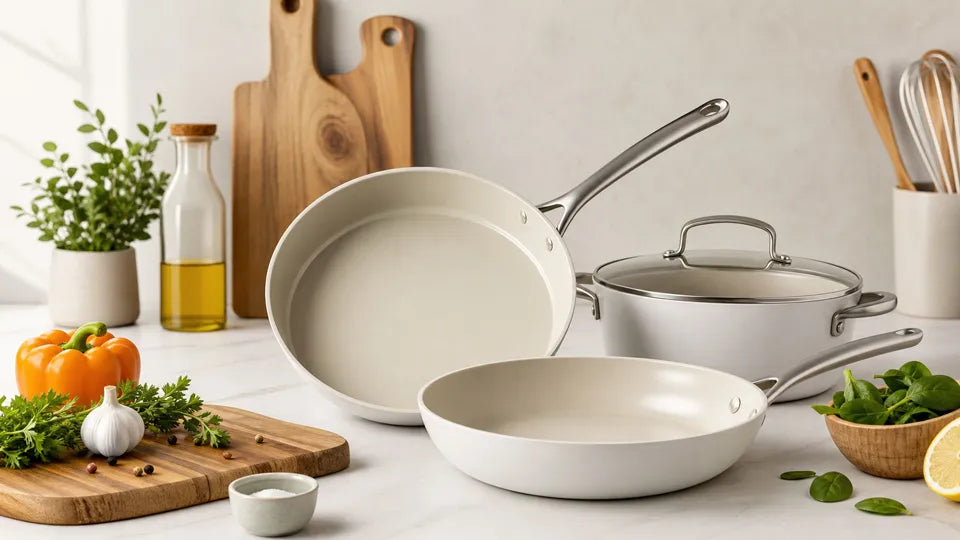
In retail environments, the vast majority of ceramic pans are actually metallic vessels coated with a mineral nonstick layer. The pan body is typically constructed from stamped aluminum or bonded stainless steel, topped with a silica glaze for easy food release.
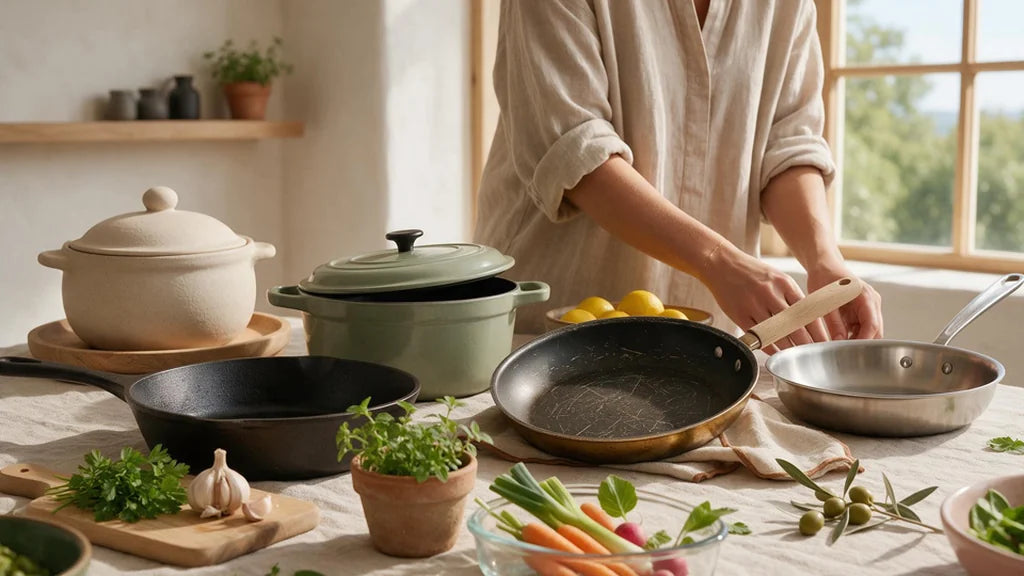
100% pure ceramic cookware, by contrast, is crafted entirely from kiln-fired clay, quartz, and stoneware minerals. While pure ceramic is oven-safe and retains heat exceptionally well for baking and braising, it is brittle, heavy, and susceptible to thermal shock if used for rapid stovetop frying.
| Cookware Category | Material Composition | Optimal Culinary Applications |
|---|---|---|
| 100% Pure Ceramic | Kiln-fired clay, quartz, and stoneware | Slow baking, casseroles, Dutch oven roasting |
| Ceramic-Coated Cookware | Clad metal body with sol-gel silica coating | Eggs, pancakes, delicate fish, everyday sautéing |
When selecting a ceramic frying pan or complete cookware set, you are almost always purchasing ceramic-coated metal cookware.
This distinction dictates proper kitchen care: ceramic-coated pans require low-to-medium heat, soft silicone utensils, and gentle hand-washing to preserve their release layer.

How Is Hybrid Ceramic Cookware Different?
Standard ceramic-coated pans feature a smooth, uninterrupted mineral layer. While they release food smoothly when new, the coating can degrade when exposed to high heat, utensil friction, or abrasive cleaning.
Hybrid ceramic cookware is engineered to address this durability challenge, delivering a balance of food release and mechanical strength.
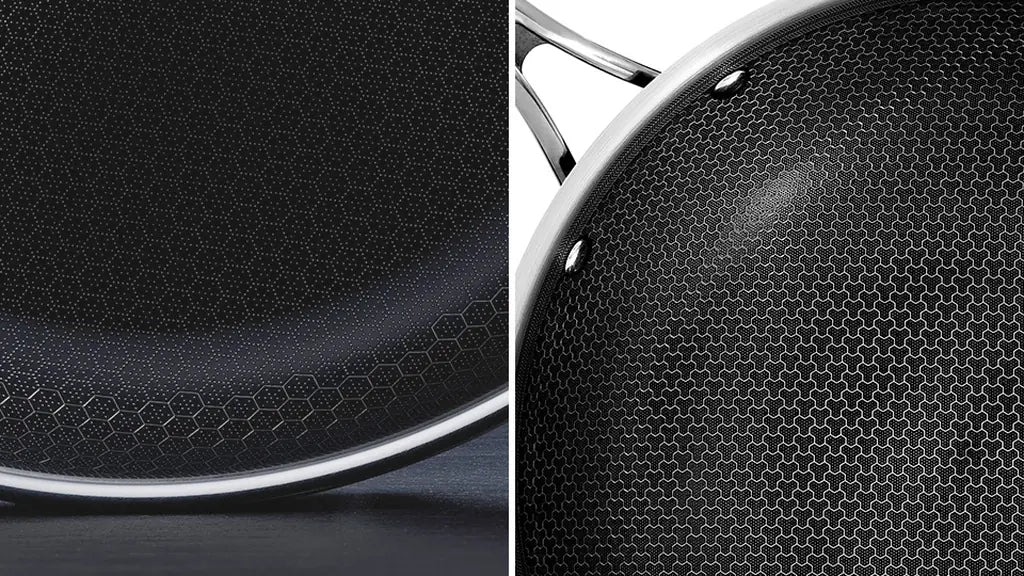
These advanced pans combine a mineral ceramic nonstick coating with a laser-etched stainless steel matrix. The raised stainless steel ridges protect the recessed ceramic valleys from direct contact with spatulas and utensils, extending the cooking lifespan of the nonstick layer.
| Cookware Type | Primary Strength | Operational Limitation |
|---|---|---|
| Standard Ceramic Nonstick | Effortless food release when new | Coating wears faster under heavy use |
| Traditional Stainless Steel | Extreme durability and superior searing | Requires precise preheating to prevent sticking |
| Hybrid Ceramic Cookware | Balanced release with superior durability | Requires a small amount of oil and heat control |
Hybrid cookware serves as a practical everyday balance: it is easier to cook on than bare stainless steel and significantly more durable than standard ceramic pans.

Is Ceramic Nonstick Coating Safe?
Ceramic nonstick coatings are safe and non-toxic when used within normal culinary temperatures. Because they are manufactured without PFAS, PFOA, and PTFE, they are widely recognized as a dependable healthy cookware choice.
Cookware safety depends on several core build and maintenance factors:
- Verified third-party testing certifications for heavy metals
- Bonding quality between the core metal and the sol-gel coating
- Strict adherence to manufacturer temperature limits
- Avoiding deep surface scratches that penetrate to the core metal
- Proper hand-washing routines using non-abrasive tools
Ceramic nonstick pans are safe for low-to-medium heat cooking, provided the surface remains smooth and free of major damage.

Ceramic Nonstick Coating Pros and Cons
Pros of Ceramic Nonstick Cookware
Modern ceramic nonstick cookware is popular for its sleek aesthetic and effortless food release:
- Smooth release for delicate foods with minimal cooking fats
- Inherently PFAS-free, PTFE-free, and PFOA-free
- Effortless wipe-down cleaning with warm soapy water
- Even heat distribution across conductive aluminum or clad bases
- Versatile performance for omelette preparation, eggs, and breakfast dishes
Cons of Ceramic Nonstick Cookware
The primary consideration with ceramic coating is long-term wear resistance. Performance decline is typically caused by common usage errors, including:
- Excessive high-heat cooking that breaks down mineral bonds
- Sharp metal utensils that cause micro-gouges
- Abrasive scrubbers that scratch the glossy sol-gel finish
- Polymerized cooking spray buildup
- Thermal shock caused by rinsing a hot pan under cold water
For high-heat searing and multi-decade longevity, multi-clad stainless steel cookware, carbon steel, or cast iron remain the preferred choices.

What Is Ceramic Nonstick Best For?
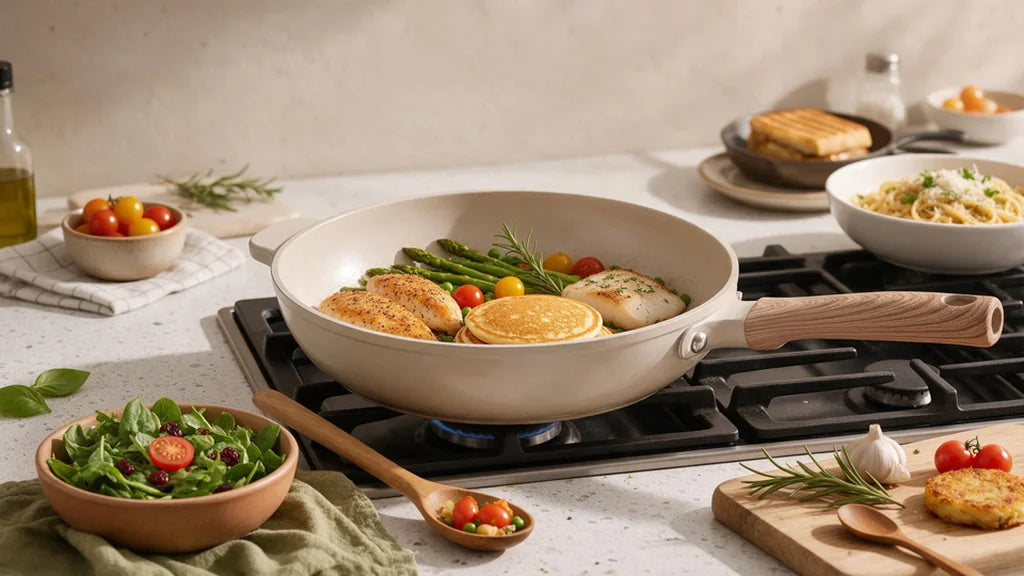
Ceramic nonstick cookware excels at delicate, low-to-medium heat recipes:
- Scrambled eggs, sunny-side-up eggs, and omelets
- Fluffy pancakes, crepes, and French toast
- Delicate fish fillets such as cod, tilapia, and salmon
- Golden grilled cheese sandwiches and melts
- Stir-fried vegetables and seasoned rice dishes
- Gentle reheating of meal prep and leftovers
In addition to skillets, dedicated ceramic saucepans perform well for oatmeal, cheesy sauces, and gravies where sticky cleanup is a concern.

Ceramic Nonstick vs. Traditional Nonstick
Ceramic coatings and traditional nonstick surfaces differ fundamentally in chemistry and longevity.
Traditional nonstick cookware relies on PTFE (polytetrafluoroethylene), a synthetic fluoropolymer known for enduring friction resistance. Ceramic nonstick pans use an inorganic silica-based mineral sol-gel coating. Because they contain zero fluorinated chemicals, ceramic pans are widely labeled as:
- PFAS-free cookware
- PFOA-free cookware
- PTFE-free cookware
- Non-toxic mineral-coated cookware
While premium PTFE pans can retain slickness longer under heavy use, mineral-based ceramic pans offer a non-toxic alternative free from synthetic fluorochemicals.

Ceramic Nonstick vs. Enameled Cookware
While both involve mineral-derived finishes, ceramic nonstick and enameled cookware serve distinct culinary purposes.
Enameled cookware features a vitrified glass enamel fused onto cast iron or carbon steel at high temperatures. It is engineered for heavy braising, stews, and acidic tomato sauces, but is not naturally nonstick for frying eggs.
| Cookware Type | Surface Chemistry | Primary Kitchen Use |
|---|---|---|
| Ceramic Nonstick | Sol-gel mineral silica coating | Eggs, pancakes, light frying, daily sautéing |
| Enameled Cast Iron | Vitrified porcelain glass enamel | Slow braising, soups, stews, oven baking |
| Solid Ceramic | 100% kiln-fired stoneware clay | Baking dishes, gratins, roasting pans |
How to Make Ceramic Cookware Last Longer
With attentive care and proper temperature management, high-performance ceramic pans can maintain reliable release for years.
1. Keep Heat Settings at Low to Medium
Ceramic coatings conduct thermal energy quickly. As noted by Health Canada's safe cookware recommendations, you should never heat an empty coated pan over high temperatures, as thermal stress degrades the mineral matrix.
2. Cook with a Touch of Oil or Butter
Even on nonstick surfaces, a light coat of cooking fat creates a protective boundary layer that enhances release and guards against scorching.
3. Avoid Aerosol Cooking Sprays
Aerosol sprays contain propellants and emulsifiers that carbonize at low temperatures, creating an invisible, sticky barrier. Use regular bottled oil or a pump mister instead.
4. Choose Non-Abrasive Cooking Utensils
Use silicone, wooden, or heat-resistant nylon spatulas. Avoid sharp metal utensils that can scratch the smooth mineral finish.
5. Hand Wash with Gentle Sponges
Allow your pan to reach room temperature before washing. Clean with warm water, mild liquid dish soap, and a soft microfiber sponge.

Conclusion: When Ceramic Nonstick Makes Sense
Ceramic nonstick cookware offers a safe, mineral-based alternative to traditional fluoropolymer coatings. It delivers clean food release, easy maintenance, and certified PFAS-free construction for everyday cooking.
By cooking over low-to-medium heat, avoiding aerosol cooking sprays, and washing gently by hand, you can preserve your ceramic pan's performance for daily meal prep.
For quick breakfast foods and delicate fish, ceramic nonstick is a practical kitchen asset. For heavy searing and multi-generation durability, pair it with clad stainless steel or cast iron.
Frequently Asked Questions
Is ceramic nonstick better than Teflon?
Ceramic nonstick is PFAS-free and PTFE-free, making it a preferred choice for cooks avoiding synthetic fluorochemicals. PTFE pans often retain nonstick properties longer, but ceramic provides a non-toxic mineral alternative.
Can ceramic nonstick pans go in the oven?
Many ceramic pans are oven-safe cookware, though temperature limits depend on the handle and lid materials. Always check the manufacturer's specified oven thresholds before baking.
Why is my ceramic pan losing its nonstick release?
Stickiness is usually caused by microscopic grease buildup, aerosol spray residue, or thermal degradation from excessive heat. A deep soak with warm water and baking soda can help lift residue and restore the surface.
Is ceramic cookware compatible with induction cooktops?
Cooktop compatibility depends on the base construction rather than the ceramic surface. To ensure your pan is induction-compatible, verify that the pan features a bonded magnetic stainless steel base plate.