What Is a Deep Frying Pan Used For?
A deep frying pan is used for meals that need both a broad cooking surface and extra room above it. Compared with a standard skillet, its taller sides better contain sauces, generous portions, and splatter while still leaving food in contact with a flat base for browning. It is especially practical for shallow-fried cutlets, saucy chicken, curries, braises, and one-pan pasta. The added depth is not automatically better, though. Low sides remain easier for quick flipping, rapid evaporation, and small portions.
What Defines a Deep Frying Pan?
A deep pan combines the broad cooking surface of a skillet with sides tall enough to hold more food and liquid. Because labels such as "deep frying pan," "deep skillet," and "sauté pan" often overlap, the actual shape tells you more than the name.
Compare Side Height and Base Area
The usable base determines how much food can brown at once; side height determines how comfortably the pan contains sauce and stirred ingredients. Compare the interior, since two 12-inch pans can offer different flat cooking areas when their wall slopes differ.
| Feature | Deep Frying Pan | Standard Frying Pan | Practical Effect |
|---|---|---|---|
| Side height | Medium to high | Low | More room for sauces and stirring |
| Base | Broad and flat | Broad and flat | Direct contact for browning |
| Evaporation | Moderate | Faster | Easier moisture retention |
| Tossing | Moderate | Easier | Lower sides favor utensil access |
Separate It From a Wok or Saucepan
A wok has a smaller lower area and tall, flared walls for tossing. A saucepan is narrower and designed mainly for liquids. The search phrase "deep pan frying pan" usually points to a pan between these shapes, with a broad base for searing and enough height for sauce.
You can therefore brown meat, sauté aromatics, add liquid, and finish gently in one vessel.
Which Meals Benefit From Deeper Sides?
Deeper sides help when volume, liquid, or splatter would make a shallow skillet inconvenient. Capacity still does not eliminate the need for space between ingredients.
Contain Sauces and Larger Portions
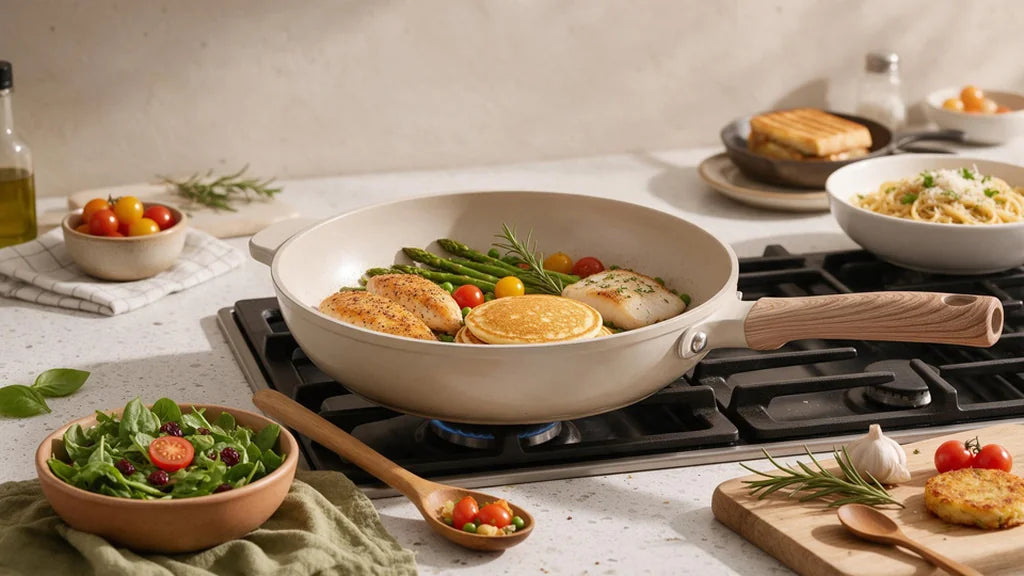
Curries, meatballs in sauce, chicken with gravy, fried rice, and skillet casseroles benefit from headroom for stirring without pushing food over the rim.
An 8 inch frying pan suits an egg or small side, while a 14 inch frying pan offers family-size base area but needs more burner and cabinet space. Depth cannot compensate for an undersized browning surface.

Reduce Splatter During Shallow Frying
Higher walls intercept some droplets when cutlets, fritters, or fish cook in shallow oil, but they do not remove risk. Pat ingredients dry and lower them into oil away from you.
The deep-fat frying guidance advises keeping water away from hot fat, avoiding overcrowding, and never leaving frying unattended. Leave headroom and use tongs or a slotted utensil.
How Does It Handle Browning?
A deep pan browns well when its base is wide enough and moisture can escape. Heat level, loading, surface construction, and preparation matter more than wall height.
Leave Food Enough Surface Contact
Arrange food in one layer with space between pieces. Crowding lowers surface temperature and collects liquid, causing steaming. Cook in batches rather than using high heat to overcome an overloaded pan.
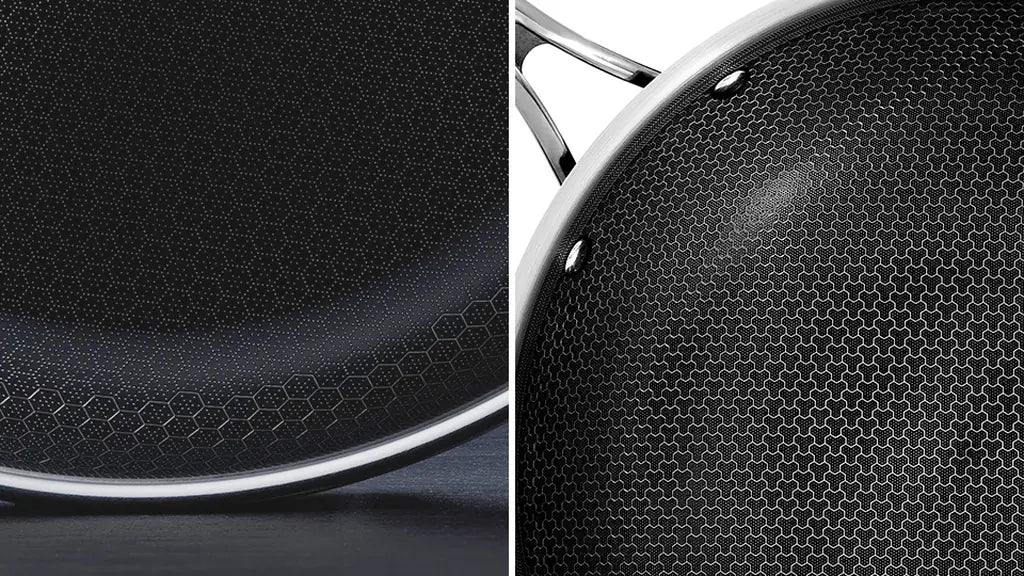
Preheating depends on the cooking surface. Whether you use a conventional stainless steel cookware frying pan or a hybrid design, follow its heat and oil instructions. For DELUXE hybrid cookware, our proper use and care guide recommends low to medium heat and a little oil when needed.

Let Excess Moisture Escape
Keep the pan uncovered during searing and reduction. Pennsylvania State University Extension notes that a wide pan speeds evaporation, explaining why an open, uncrowded pan reduces sauce faster.
For more dependable browning:
- Dry the ingredient's exterior.
- Preheat according to the cookware instructions.
- Add oil only as the food or surface requires.
- Avoid moving food before the first side develops color.
- Reduce the batch size if liquid collects.
When Is a Lid Useful?
A lid helps after browning when a meal needs retained moisture and gentler heat. Use it as a control, not a default.
Cover Braises and Gentle Finishes
After searing chicken, meatballs, or vegetables, add the recipe's liquid, lower the heat, and cover. Trapped steam helps thicker ingredients cook through, making a frying pan with lid useful for short braises.
For meat and poultry, appearance through a glass lid cannot confirm safety. Check the thickest portion against the USDA temperature chart with a food thermometer.
Cook Uncovered When Crispness Matters
Leave the lid off for crisp fish, mushrooms, cutlets, and final reduction. Condensation can soften the surface, so uncover for the final minutes if the center was finished covered.
| Desired Result | Lid Position | Heat Approach |
|---|---|---|
| Strong browning | Off | Follow the pan's recommended preheat range |
| Gentle covered finish | On | Lower heat after adding liquid |
| Thicker sauce | Off or ajar | Simmer and monitor reduction |
| Crisp final surface | Off | Let condensation evaporate |
How Does Depth Change Handling?
Depth adds capacity and loaded weight. Consider lifting, stirring, transferring food, and cleaning.
Account for Loaded Weight
Judge the pan with food, liquid, and a lid in mind. A helper handle supports two-handed movement. Keep the main handle away from traffic and avoid carrying hot oil.
Before buying, check:
- Empty pan weight and balance.
- Main-handle grip with an oven mitt.
- Helper-handle clearance from nearby burners.
- Sink and cabinet space for the full diameter.
Use the Rim and Handle for Controlled Pouring
A clean rim can guide sauce, but use a ladle for very full pans and steady the helper handle when pouring. Never use a loose lid as a makeshift strainer.
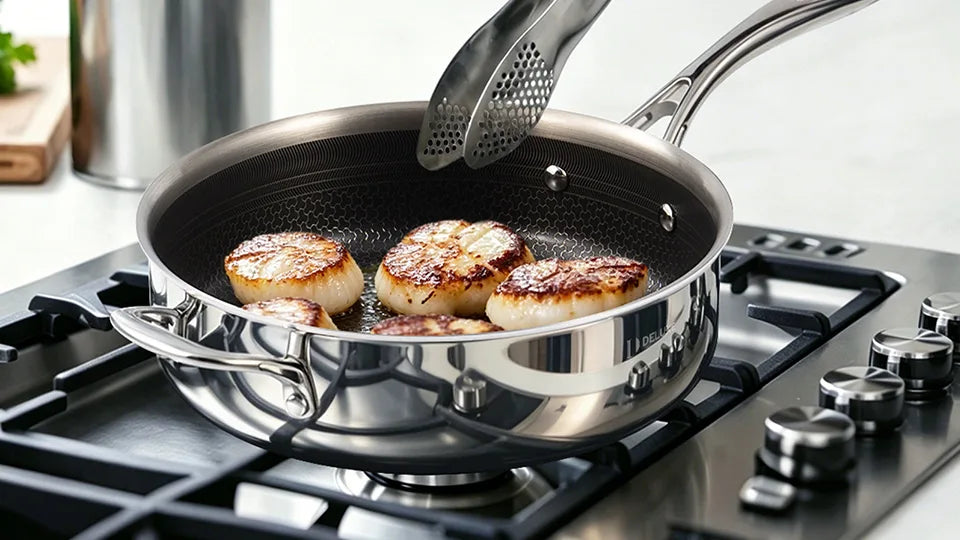
If you usually brown food before adding sauce or a lid, our 3.7 Qt Hybrid Sauté Pan with Lid brings those steps together. Its broad base supports surface contact, while deeper sides contain stirring and sauce. An aluminum core spreads heat, 304 stainless steel reinforces the structure, and a 430 magnetic stainless steel base supports gas, electric, ceramic, and induction cooktops. The hybrid ceramic nonstick surface suits meals that move from browning to gentler cooking.

When Should You Choose a Standard Frying Pan?
A standard skillet is better when access, evaporation, and compact handling matter more than capacity.
Prefer Low Sides for Quick Turning
Low, sloped sides make it easier to reach under eggs, turn fish, or toss vegetables. They also release moisture faster. If that suits your cooking, our frying pan collection offers shallower options to compare.
Avoid Unnecessary Depth for Small Meals
A compact pan is easier to wash and store. For one egg, an omelet, or one reheated portion, an 8-inch skillet may be more proportionate. Match burner and base sizes instead of choosing a 14-inch model only for capacity.

Choose the Right Deep Frying Pan
Choose according to the meal's sequence. Prioritize a broad base for browning, sufficient wall height for sauces, a secure handle for loaded lifting, and a fitted lid if you regularly braise. Then confirm cooktop compatibility and separate oven limits for the body, lid, knob, and handles.
If many of your dinners move from searing to simmering, compare DELUXE deep frying pans by capacity, lid configuration, handle setup, and base size. The best choice is the pan that fits both your usual portions and the way you move through a recipe.
Common Questions About Deep Frying Pans and Cooking Uses
Q1. Can You Cook Rice in a Deep Frying Pan?
Yes, if the pan has a fitted lid and enough capacity for the rice to expand. Use the liquid ratio and cooking time specified by the rice recipe, keep the heat controlled, and avoid lifting the lid repeatedly. A heavy or well-fitted lid helps limit steam loss.
Q2. Can a Deep Frying Pan Replace a Dutch Oven?
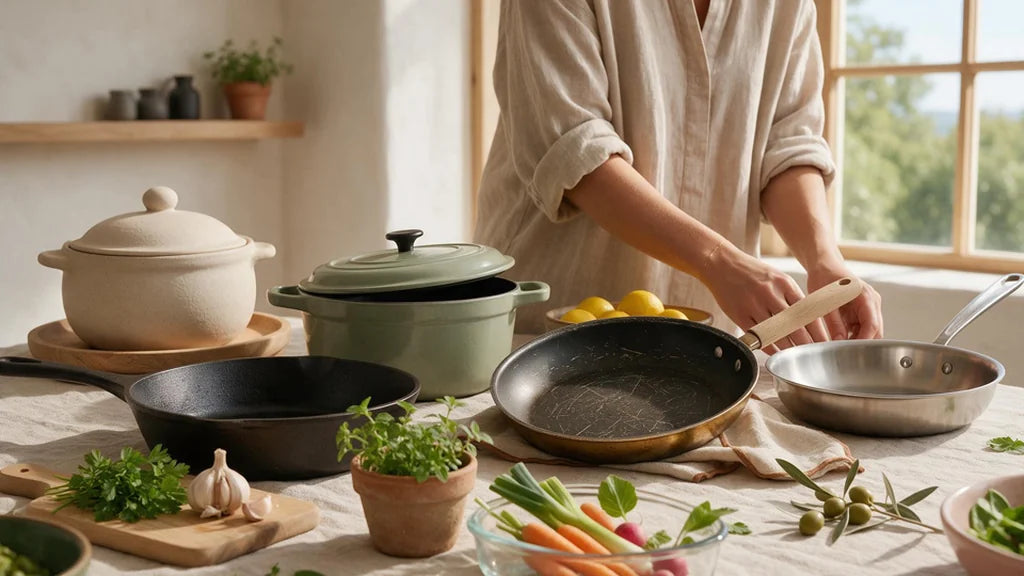
Only for some meals. A deep pan can manage short braises, sauces, and shallow one-pan dishes, but a Dutch oven usually offers greater volume, taller walls, and a heavier lid for long stews or large roasts. Choose according to batch size and the recipe's oven requirements.
Q3. How Much Oil Is Needed for Shallow Frying?
Use enough oil to reach roughly one-third to halfway up the food, then follow the recipe and pan capacity. Leave generous headroom for bubbling and displacement. Do not fill a pan by a universal volume because food thickness, batch size, and pan diameter change the safe working level.
Q4. Can a Deep Pan Be Used for Pasta Sauce?
Yes. The broad base helps sauté aromatics and reduce liquid, while the higher sides contain stirring and added pasta. For acidic tomato sauces, confirm that the cooking surface is compatible, avoid storing the finished sauce in the pan, and follow the cookware maker's cleaning guidance.
Q5. Does Every Deep Frying Pan Include a Lid?
No. Product photography may show optional accessories or several pieces from one range. Check the package contents for the exact size and color you select, then confirm that any separate lid matches the pan's rim profile, diameter, handle clearance, and oven limit.