Sauté Pan vs. Saucepan: Which One Should You Reach For?
A sauté pan is usually the better choice for browning, shallow braising, and meals that need a wide cooking surface. A saucepan is usually better for smaller amounts of liquid, grains, reheating, and sauces that benefit from a narrower opening. If you are searching for a saute saucepan comparison, focus on shape before capacity: two vessels labeled with similar volumes can behave very differently on the stove. The right choice depends on whether your recipe needs surface area, depth, faster evaporation, controlled pouring, or a smaller burner footprint.
How Do Sauté Pans and Saucepans Differ?
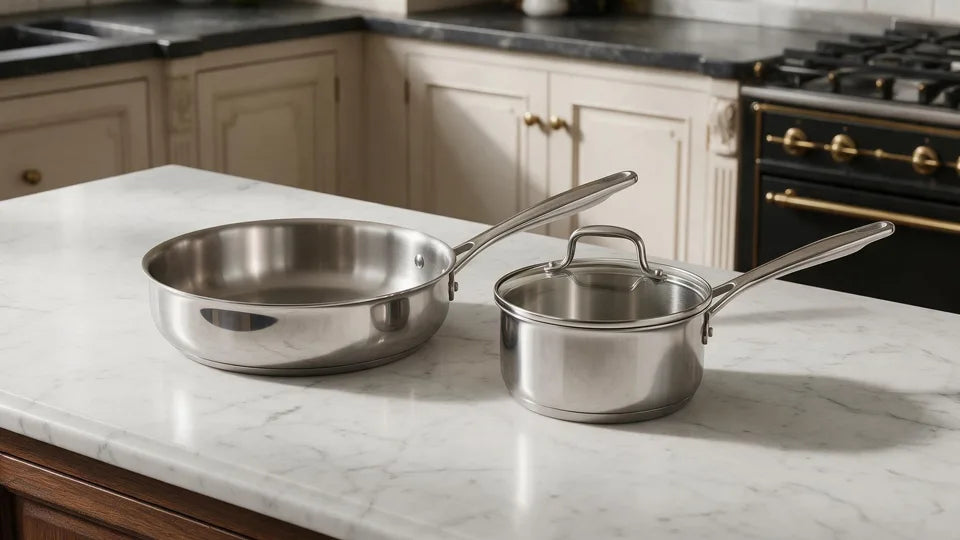
Sauté pans are wider and relatively shallow, while saucepans are narrower and taller. Their proportions affect surface contact, evaporation, capacity, and handling.
Compare Base Width and Side Height
A sauté pan spreads its capacity across a broad base with medium-height sides. This gives proteins, mushrooms, and vegetables more surface contact while still containing splatter and a modest amount of liquid.
A saucepan concentrates capacity vertically. Its smaller base offers less room for a single layer, but its tall sides contain liquids and limit the exposed surface. Purdue Extension's cookware shape descriptions likewise distinguish the deep saucepan from the wider sauté pan used for browning.
Compare Long Handles and Overall Capacity
Both shapes usually have a long handle for stirring, tilting, and moving. However, a wide sauté pan spreads weight outward, while a filled saucepan holds a deeper column of liquid over a smaller base.
A helper handle can make a larger sauté pan easier to lift. With a medium saucepan, balance matters when pouring. In either case, leave enough headroom for stirring and simmering rather than filling to the rim.

Which One Is Better for Browning?
A sauté pan is generally better for browning because its wider base lets more food touch the heated surface at once. A saucepan can brown a small batch, but its limited base area makes crowding more likely.
Use the Sauté Pan's Wider Base
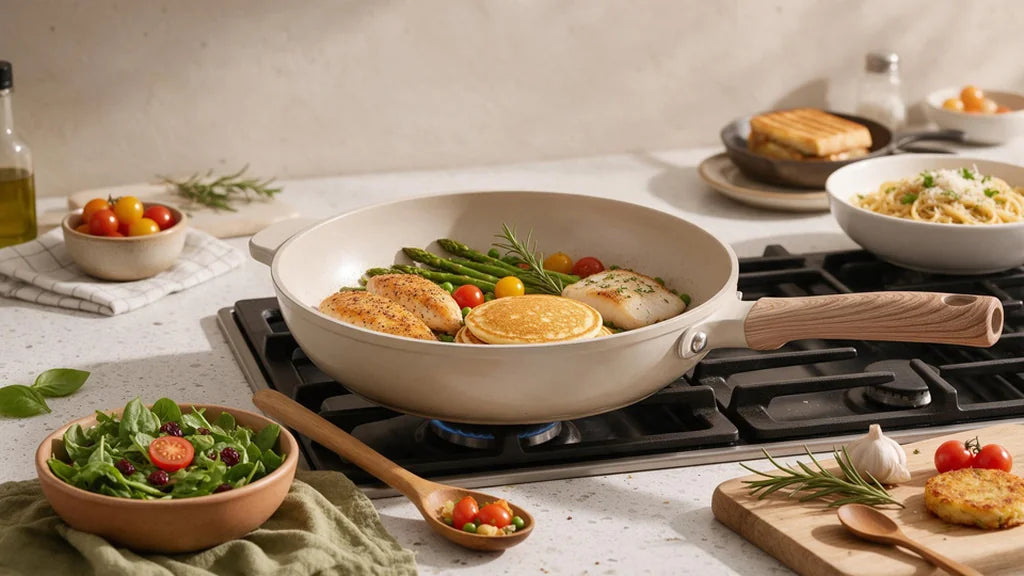
Browning works best when food contacts the pan and moisture can escape. A wide base lets chicken, meat, or mushrooms sit in one layer. Dry the food, avoid overloading the base, and turn each piece after color develops.
Browning builds flavor; it does not seal juices inside meat. Because exterior color does not prove doneness, use a thermometer and follow USDA safe internal temperature guidance.
Prevent Crowding Before Adding Liquid
Crowding traps moisture, causing food to steam instead of brown. If pieces overlap or liquid pools across the base, work in batches, then return everything before adding the recipe liquid.
This brown-then-simmer sequence suits a sauté pan: the broad base handles browning, and the straight sides contain a pan sauce or shallow braise. Follow the heat and oil guidance for the specific surface rather than treating every stainless steel saute pan alike.

Which One Is Better for Simmering?
A saucepan is usually better for simmering modest portions of soup, milk, gravy, or sauce. Its taller sides contain bubbling liquid, and its narrower opening can limit evaporation when the recipe should maintain volume.
Use a Saucepan for Smaller Liquid Volumes
A small or medium saucepan keeps modest liquid volumes deep enough for stirring, whisking, or covering grains. A 3 quart saucepan can handle several servings of rice, oatmeal, soup, or sauce, provided the recipe leaves adequate bubbling room.
Foaming foods such as oatmeal, milk, and beans need extra headroom. A lid limits evaporation, but the recipe should determine when it stays on or comes off.
Choose Depth Based on Stirring Needs
Tall sides contain liquid, but excessive depth can make it harder to see the bottom or reach it with a whisk. Match depth to both the recipe volume and your utensil.
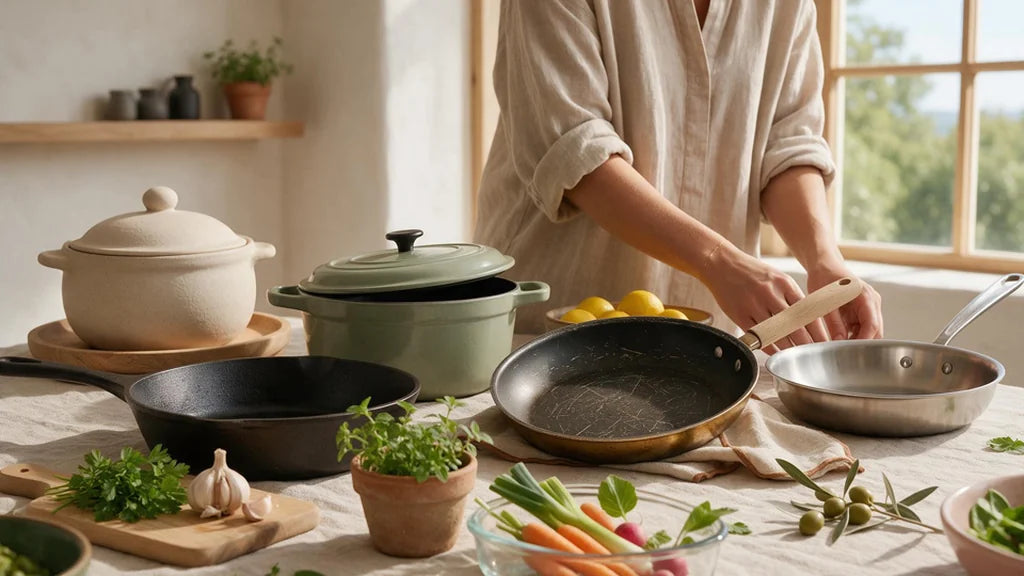
For custards, roux-based sauces, and oatmeal, your spatula or whisk should reach the base comfortably. A ceramic saucepan or other coated pan may ease food release, but heat, utensil, and cleaning rules remain product-specific.

How Do They Handle Grains and Sauces?
Both shapes can cook grains and sauces, but they manage moisture differently. The saucepan favors containment and slower moisture loss, while the sauté pan favors surface access and faster reduction when used uncovered.
Match Evaporation to the Recipe
Absorption-cooked grains benefit from measured liquid and limited evaporation. A saucepan with a fitted lid often works well, though grain type, rinsing, altitude, and lid fit can change the required ratio.
A sauté pan suits pilaf or risotto when aromatics or grains need to cook across a broad base. Its wide opening also speeds uncovered reduction, which helps pan sauces but demands closer monitoring.
Consider Lid Fit and Pour Control
A fitted lid controls moisture but does not make the shapes interchangeable. Reduce uncovered unless directed otherwise, and lower the heat during covered simmering to prevent boilover.
A narrow saucepan is often easier to direct over a bowl, especially with a shaped rim or spout. A broad sauté pan may require two hands when it contains hot liquid.
Which Pan Uses Burner Space Better?
A saucepan generally uses less horizontal stove space, while a sauté pan claims a wider burner area. The best fit is the pan whose base aligns reasonably with the active element and leaves enough room for the rest of the meal.
Match Base Diameter to the Element
Compare the flat base, not the rim, with the heating element. A base that extends far beyond a small burner may heat less evenly at the edges, while a very small vessel wastes space on a large element.
For induction, check the exact cookware rather than judging by appearance. The Department of Energy's induction cooking overview explains that compatible cookware needs a suitable magnetic base. The cooktop may also specify a minimum base diameter.
Plan Around Other Cookware in Use
A narrow saucepan leaves more room for a skillet, stockpot, or second saucepan on a crowded range. That can matter when one burner holds rice while another cooks a main dish. A broad sauté pan may block an adjacent burner even when its labeled capacity is moderate.
Before buying, measure the distance between burners you use together. Allow room for handles so they do not cross another burner or extend into a walkway.
Do You Need Both Shapes?
You need both only when your regular meals ask for both a broad browning surface and a narrow liquid-handling vessel. If one of those tasks is rare, a single carefully chosen pan may cover your routine without duplicating storage space.
List Recurring Meals First
Review the meals you cook most often. Proteins with pan sauces, browned vegetables, shallow braises, and one-pan pasta favor a sauté pan. Rice, oatmeal, soup, reheated sauces, and boiled eggs favor a saucepan.
If dinner regularly needs a browned main plus a separate grain or sauce, both shapes are useful. If you mainly cook soups and grains, the saucepan may earn more use.
Avoid Duplicate Capacities Without a Distinct Task
Similar quart ratings are not duplicates when the vessels serve different jobs. Compare base diameter, side height, lid, weight, handles, and storage footprint rather than capacity alone.
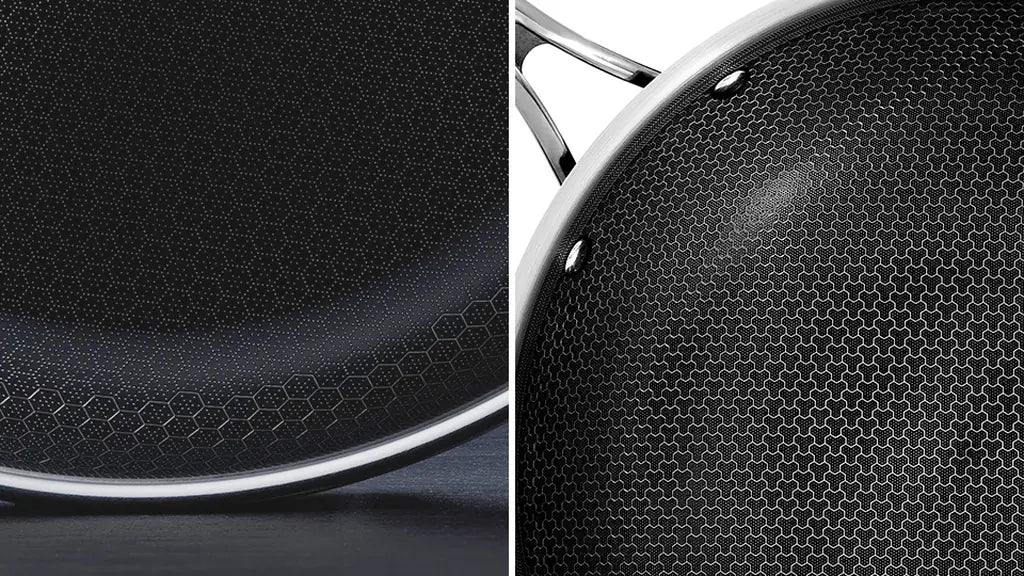
Construction matters separately from shape. Our hybrid cookware technology combines an aluminum-core tri-ply body, a magnetic 430 stainless steel base, and a structured surface with stainless steel peaks and ceramic-coated valleys. The base supports induction compatibility, while the core distributes heat.

Choose Between a Sauté Pan and Saucepan
Choose the sauté pan for browning, uncovered reduction, and recipes that move from searing to simmering. Choose the saucepan for grains, reheating, pouring, and modest liquid volumes. To build a saute saucepan pair, compare our lidded 5 Qt Hybrid Sauté Pan and 3 Qt Hybrid Saucepan. Both have magnetic bases for gas, electric, ceramic, and induction cooktops. Measure your burners and storage, then follow our use and care guidance.
Frequently Asked Questions About Sauté Pan vs Saucepan
Q1: Which Pan Is Easier to Use With a Kitchen Scale?
Usually, a saucepan is easier to place on a compact scale because it has a smaller footprint. A wide sauté pan may cover the display or extend beyond the weighing platform. You can also weigh ingredients in a separate bowl before transferring them.
Q2: Can the Same Lid Fit a Sauté Pan and a Saucepan?
Sometimes, especially within a coordinated cookware line, but diameter is not the only factor. The rim profile and seating depth must match. Confirm compatibility for the exact models before using one lid across two different vessels.
Q3: Which Pan Is More Convenient for Refrigerator Storage?
A saucepan often occupies less shelf width, while a sauté pan may hold food in a shallower layer that cools more evenly. Do not place a hot pan directly in the refrigerator. Transfer food when appropriate and follow safe cooling and storage guidance.
Q4: How Should I Store a Sauté Pan and Saucepan Together?
Stack them only with a soft protector between their cooking surfaces. Put the heavier or wider piece on the bottom, and avoid letting handles carry the weight of other cookware. Store lids separately if their knobs make the stack unstable.
Q5: When Is a Second Saucepan More Useful Than Adding a Sauté Pan?
Usually, a second saucepan is more useful when you often prepare two liquid-based components at once, such as grains and sauce. A sauté pan adds more value when the missing task is broad-surface browning, shallow braising, or cooking larger one-pan meals.